Category Archives: Stream Restoration

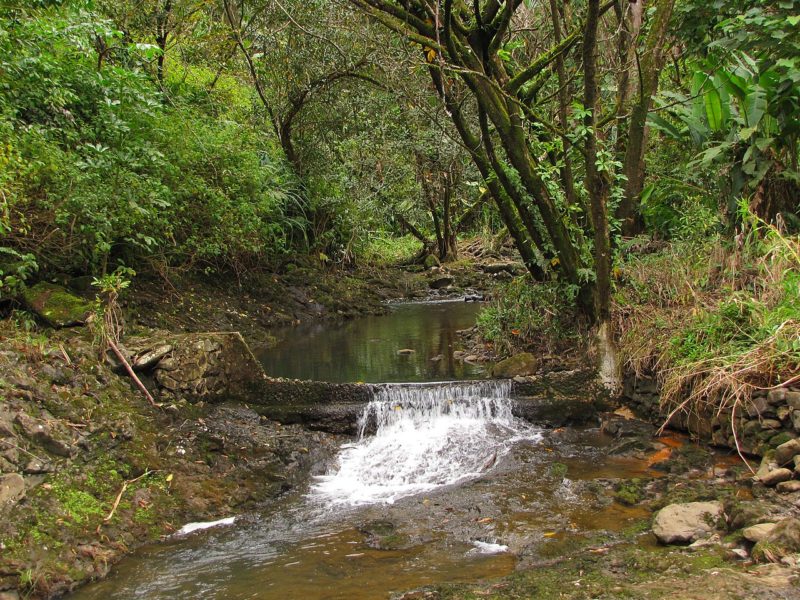
Maui Stream Flows Below Normal

Excerpted from a Maui News article

The latest report from the U.S. Geological Survey shows that stream flow in Maui County and statewide is below normal and mostly “much below normal,” the second-lowest category ranging from low to high.

This continues a trend that now extends back a full century, to when plantations and ranches began keeping records of stream flows around 1911.

Stephen Gingerich, research hydrologist with USGS in Honolulu, said it is hard to determine whether the century-long decline in Hawaii’s streams is more a result of changes in climate or in land use, although since the declines are statewide, that appears to implicate climat


Maui’s Water Resources: A General Overview

Researched and Written by
Lucienne de Naie and Marty McMahon, M.A.
with assistance from Bobby Becker and Terry Reim

Summary of Research conducted by Maui Tomorrow’s
Ka Waiola Project 2002-2004

Made possible with support from Maui Tomorrow Foundation, Inc
Hawaii Community Foundation, Tides Foundation, Patagonia Foundation, the County of Maui and many private donors.

Draft release: Summer 2005

Preface
Planning Maui’s water future will require a number of policy decisions. It will need to be based on accurate, updated information. It will need to consider water quality and long-term sustainability, looking beyond the quick and easy availability of water supplies. It will need to find the resources to care for the watershed lands, their plants and their streams. It will need to include managing water demands, along with providing water services. It will need to recognize the limits to our water resources, yet treat the public fairly. It will need to respect traditional and customary water uses handed down from the Hawaiian culture and protected in our contemporary laws. It will need to begin the transition from predominantly private control of the majority of our water resources to a shared responsibility for the benefit of the public trust. Most importantly, our future policies will be most successful if they can keep in mind that water is not a mere commodity, but a living force that deserves our respect as an essential part of all life.

This report is dedicated to Doak O. Cox, PhD, and Hiroshi Yamauchi, PhD who both devoted a large portion of their lives to the pursuit of accurate and practical information regarding Hawaii’s water resources. The people and policy makers of Hawaii have benefited from their knowledge.

In 1979 Dr Cox made an observation that also sums up our current situation:
“From the last two years, it seems inescapable that the rate of research and the rate that research is disseminated to policy makers has not kept pace.”

This report, by building upon the many invaluable efforts of past researchers, hopes to make useful information available to all the citizens of Hawaii nei.

Introduction: Planning for the 21st Century

Managing Maui’s Water Resources

Managing Maui’s freshwater resources is not a simple matter. Maui’s resident and visitor population has doubled over the past 20 years. Water demand continues to grow ahead of supply. For the past century, large agricultural landowners controlled most of the island’s streams and groundwater resources.

As agricultural lands transitioned to resorts and housing, there was not sufficient public water infrastructure in place to meet the new demands. The large landowners, or their successors, formed private water companies to meet this need. As of 2005, approximately 12 % of Maui’s 45 MGD domestic water supply (2003 CWRM reports) is provided by private or individual water systems. This figure could grow larger as former plantation lands in east, west, south and central Maui are urbanized, while existing County water systems deal with numerous expansion challenges.

Maui’s public domestic water systems currently use both ground (well) water 70% and surface (stream water) 30%. Both have advantages and disadvantages that have been evaluated in other reports such as Maui County’s Water Use and Development Plan (WDUP) compiled in 1990 and updated in 1992 and now under review in 2010. Although the WDUP saw Maui moving more towards ground water use over a 20-year horizon, this has been a slow process. Ground water development faces challenges, such as the high cost of pumping, lack of public land for well sites, agricultural pollutants in many aquifers, permitting and the expense of infrastructure installation to relatively remote well sites. It is likely that both ground and surface waters will continue to play a role in Maui’s public water system for some time to come.

Who Uses Maui’s Water (based upon 2002-04 public records)

Every day on Maui over 400 MGD of water, fresh and brackish, is used for domestic, industrial, commercial or agricultural purposes. Only around one-eighth,
or 45 MGD of that amount is utilized for domestic and commercial use. Less than one-tenth of Maui’s water resources are actually under public control although billions of gallons of water originate on public lands. The vast majority of present use is for agricultural irrigation. Currently, and historically, Maui is the state’s biggest user of surface water. An average of 272 MGD of fresh stream water from both East and West Maui streams is diverted into irrigation ditches each day. (WDUP, 1990)

Only two golf courses on Maui use stream waters for irrigation, Sandalwood in Waikapu and the Kapalua course in West Maui, the rest use private brackish wells or reclaimed water. Four large landowning companies have diverted stream waters for over100 years, although only one of them (HC &S) has significant agricultural operations still underway. Haiku, Paia and Kahului Aquifers are irrigated with over one hundred million gallons of fresh stream waters each day. Although drip irrigation has been used since 1986, it is still theorized that the irrigation artificially augments the fresh water reservoir throughout these shallow aquifers. (Nance, U T C EIS, 2003)

Included in totals of diverted stream water is also pristine groundwater from high-elevation “development tunnels” in the West Maui mountains. Around 13 MGD of this clean ground water is directed or allowed to mingle with surface waters and carried to irrigation ditches after it seeps from tunnels drilled into the rocky walls of stream gorges. (source-USGS reports: 00-4223, 2001 & 03-4060, 2003)

Only two development tunnel sources on Maui are currently specifically used for the public water supply- ‘Iao tunnel near Kepaniwai Park (.5 to 2 MGD) and Awalau tunnel (approximately .2 MGD) in upper Ha’iku. (DWS 2003, pumping reports)

An average of 75 MGD of ground waters, some brackish, some not, is pumped and used for private irrigation purposes on Maui every day. (2002 CWRM reports). This includes use by large agricultural companies and visitor facilities (resorts and vacation rental condos) which have brackish wells for golf course and landscaping irrigation. HC& S reports that its irrigation waters for 37,000 acres of sugar cane come 55% from stream sources and 45% from brackish wells (69 MGD- 2002 CWRM reports.). A more detailed view of Maui’s water use follows.

Domestic Use- Total water use- Maui island: public & private 44.92 MGD (2002)

Private Water companies (from wells) 4.32 MGD (2002 CWRM records)
Private and subdivision potable wells: .5 MGD (2002 CWRM records-est.)
Maui County DWS (from wells) 28 MGD (2002 DWS records)
DWS surface water (treated for potable use) 12.1 MGD (2002 DWS records)

Private Potable Water Systems

* Currently (2005), six small private water companies either supplement the county’s domestic water service areas or operate in areas with no county water service.
Some private use reports are incomplete. est. use: 4.77 MGD (2002 CWRM records)

* In addition, Maui has a growing number of private subdivision water systems and scores of individual private wells and diversions in areas where a limited number of public or private potable system hookups exist.
Private and subdivision wells potable ground water use: .5 MGD (2002 records-est.)
Note: this use is likely to grow as subdivisions are built out and wells pump nearer their capacity to meet the need. Several subdivision wells use only a small portion of their capacity. This figure could be 2.5 MGD or more by MGD by 2010

Private Non-potable Systems
Total non-potable use- ground & surface water Maui island: 407.47 MGD (2002)

* For non-potable water delivery, there are nine private systems (including the six which also supply potable water) utilizing both ground and surface water.
Ag ground water fresh: 13 MGD (from tunnels est.- 2002 CWRM.)
Ag ground water brackish 70 MGD (from wells-2002 CWRM records)
Surface water 259 MGD (est. 1990 WUDP)

* Hundreds of irrigation or industrial wells are throughout the island of Maui.
Private brackish irrigation wells 6 -7MGD (2002 records & est.)
County Parks Dept 1 MGD (2002 est. records)
Industrial wells- salt or brackish 58.47 MGD (1990 WUDP)

To sum up the above: Maui Ground Water Use (estimated from 2002 records)
Domestic: 36.82 MGD (private and public systems)
Non-domestic potable: 13.77 MGD (private irrigation use)
Non-potable 70 MGD (private irrigation use)
TOTAL 116.59 MGD (potable & irrigation)

Maui Surface Water Use (estimated from 2002 records)

Maui had highest rate of stream diversion in state in 1990 265 MGD (HWRPP)
Domestic surface water use (potable) 12.1 MGD (DWS- all systems)
Non potable surface water use 272 MGD (large ag diversions)
TOTAL: 289 MGD (CWRM records 2002)

Managing the DWS system is only one part of managing Maui’s water resources for the future.

Management Responsibilities and Strategies
While the Maui County Department of Water Supply (DWS) has the mission to
supply water within its service areas, the State Commission on Water Resource Management (CWRM) is tasked with permitting and regulating new source development. When it was created in 1987 to assume this task, the CWRM commissioned two studies as part of its State Water Plan to help guide water management decisions: the Hawaii Water Use and Development Plan (HWUDP) and the Hawaii Water Resources Protection Plan (HWRPP).

It was these plans that set the basis of county water planning by assigning each island an estimated sustainable yield (SY) of ground water that could be safely withdrawn. The HWRPP (George Yuen & Assoc., 1990) for example, divided the Island of Maui into six sectors with a total of 25 “hydrological units” or aquifers.

How Much Water Do We Have?

“Good estimates of sustainable yield need a reliable data base. In most of the State not enough is known about the extent and behavior of groundwater to allow more than a weak estimate of sustainable yields.” George A.L.Yuen & Assoc., HWRPP 1990 p. V-2

Estimated Sustainable Yield of Maui Aquifers

The SY is defined as the “maximum continuous rate of pumping from an aquifer that will not impair the utility of the water or the rate at which it is withdrawn.”

Development of Sustainable Yield Values
* In 1990, the HWRPP theorized a total sustainable yield of 476 MGD of fresh potable water for the island of Maui. In the updated HWRPP (c. 2008) that amount was lowered to 415 MGD.

However, sustainable yield figures for Maui are not based on a substantial body of contemporary data. In 1988, they were derived from O’ahu studies, since that was the only information available to the consultants in 1987. Some of Maui’s sustainable yields were re-evaluated when additional information became available from USGS Central Maui studies (2006), factoring in more current data on recharge, geological structure and interconnectedness. The bulk of the island’s aquifers, however, including all of those hoped to have a high yield, did not have any new information to base their re-evaluated status on in the recently updated state report.

There are physical boundaries associated with some of Maui’s aquifers (such as ridge lines, shorelines or gulches,) but many do not have any distinct geological or geographical boundaries and are separated from neighboring aquifers only by arbitrary lines on a map. Realistically, a number of Maui’s individual aquifers are quite interconnected, but the state’s water study (HWRPP) assigned each of them a separate sustainable yield (SY) as if each had its own portion of useable water. This can be confusing and lead to inaccurate assumptions.

* Nearly two-thirds (65%) or 311 MGD of Maui’s estimated sustainable yield in 1990 was theorized to lie in the nine aquifers that form the remote East Maui rainforest area and rugged Southeastern slopes of Haleakala (roughly from Waikamoi stream to La Perouse Bay). (See Map) The 2008 update estimated the yield from the nine east maui aquifers to be 297 MGD, but acknowledged that the estimates were not very reliable since very little hydrological information is available for this region. There is little scientific evidence that either of these are an accurate forecast. East Maui’s geologic youth (under 1 million years old) makes it an unlikely candidate for significant groundwater storage, in spite of high rainfall.

Recent USGS hydrology studies (USGS report, 1999) indicate that groundwater from Ke’anae to Nahiku (the rainiest part of East Maui) is completely interconnected with stream flows. Since the majority of stream flows are diverted from three of the wettest East Maui aquifers, much of their potential water supply may already be used. Our sustainable yield map and values need to be updated with solid information.

Updating Sustainable Yield Values

The sustainable yield figure of 476 MGD for proposed in 1990 for Maui Island has been widely referred to by both laymen and water planning professionals as if it represents a dependable quantity of future water supply. It is far from this. The HWRPP authors who crafted this figure for Maui were very aware that they had scanty data from the neighbor islands to work from. Acknowledging this, they made a number of qualifying remarks in their study (see next section). Yuen et al specifically recommended that sustainable yields for each aquifer be “re-evaluated periodically every five years, as new information became available.” Unfortunately, the 2008 evaluation is the first update since 1990 and the level of new information available is confined to very few aquifers in Central Maui.

Over the last fifteen years, several sustainable yield figures for Maui Aquifers have been revised downward since they were first set in the late 1980′s. Aquifer’s affected are Ha’iku, Makawao and Pa’ia, but the “official aquifer map” used by local, state and federal planners continued to show “old” values for both Ha’iku and Pa’ia until the 2008 update..

Concurrently, the demise of three large agricultural operations, Pioneer Mills, Maui land and Pine and Wailuku Agribusiness, as well as development of former farm lands in East Maui has vastly altered the amount of irrigation recharge going into seven aquifers where two-thirds, (24 out of 35) of the County DWS wells, are located. Without the recommended periodic re-evaluation of Maui’s sustainable yield it would appear that state, county and private water company planners could be basing their future decisions on unsupported assumptions, rather than reliable data.

USGS scientists and others have suggested that the sustainable yield of the ‘Iao aquifer may need to revised downward and that the 8 MGD SY for Waihe’e aquifer would not be reliably available through the current configuration of county wells. Nevertheless, both these heavily used aquifers were set at the same SY in the recent HWRPP update. A few West Maui aquifers were re-evaluated slightly downward in the 2008 report, while dozens of major developments (up to 16,000 additional units) are being proposed for the area.

This lack of accurate information contributes to confusion among the public, policy makers and planning professionals. In essence we are being asked to write checks on our water resources bank account without having a clear idea of its existing account balance. Prudent water planning would suggest that reliable data should be gathered to make future water decisions.

Avoiding Unsupported Assumptions
Yuen, et al cautioned that most neighbor island sustainable yield figures were estimates only, due to limited data. They noted that:

“Estimates of sustainable yield are not meant to be an exact number to be used in final planning documents. The estimates are constrained not only by scanty database but also by the fact that they do not consider the feasibility of developing the ground water. The estimates should not be equated to developable ground water. In many regions, taking advantage of a high estimate would not be economically feasible.”

The HWRPP authors then listed five
“Considerations restricting the unqualified use of the sustainable yield estimates.”
Four are repeated here.

1. “The estimate is computed by the water balance method for pre development conditions. This means that transfer of water from one Aquifer system to another for irrigation is not taken into account in the System affected by recharge from surplus irrigation.”
In common language: The authors counted irrigation water brought into an aquifer as part of its recharge and therefore its available sustainable yield. If large-scale irrigation recharge within an aquifer changes, the sustainable yield would most likely need to be adjusted.

2. ” Assumptions about the state of an aquifer may be faulty, in particular a value for an initial head”
In common language: The authors had scant actual data to determine the level of water above sea level in Maui wells (“head level”) in many aquifers. They acknowledged that their estimates based upon rainfall and slope calculations for the island of O’ahu, could be inaccurate (Maui and the Big Island, for example, are very different from O’ahu geologically.) If estimates of head levels shift, sustainable yield calculations would also need to be adjusted.

3. “Sustainable yield is calculated as the total water supply developable. In most cases the estimate would be potable where optimal extraction techniques were employed. But in some instances none of the estimate would be potable.”
In common language: The estimated sustainable yield could only reliably be developed through proper depth, placement and capacity of wells. Without careful consideration of well location the estimated sustainable yield could be reduced or not have acceptable chloride levels.

4. “‘The sustainable yield estimate should not be equated to feasibly developable water, either technically or economically”
In common language: Sustainable yield describes a potential, not necessary a practical supply of water. Groundwater may be available in areas that are contaminated with pollutants, remote, biologically fragile or technically impractical to develop.

The HWRPP authors concluded their comments with the observation: “In view of the above limitations, the sustainable yield estimates should be used as a guide in planning, rather than an inflexible constraint.”
(source: all HWRPP p. V-3.)

How Does Our Public Water System Work?

Maui County Potable Water Use
DWS fresh water uses 40.1 MGD (surface & ground sources)
30% surface & 70% ground water
Private Companies and private domestic users 4.85 MGD (ground sources)

Based upon its reporting records (2003), the DWS system on Maui has 35 wells spread over Central, West and East Maui. The DWS wells produce around 28 MGD. Around one fifth of this output comes from one source, Shaft 33 in Wailuku, that the county does not own. The DWS system in Central Maui relies primarily on ground water from 14 wells.

A View of County Wells- All Districts
5 wells have various levels of pesticide intrusion, which must be treated, and their use has been very limited over the past 10 years (a little under 1 MGD combined.)
3 wells are permitted, but not in use until infrastructure is complete.
2 are not used because of unacceptable chloride levels
An additional 14 wells in the DWS system are constrained in their output either by siting, infrastructure or water source limitations and are not regularly reported as producing 1 MGD of water for the system. Altogether these 14 wells have a total output of 2.7 MGD

At this point the County is depending upon just 11 wells (1/3 of its system) to produce 24.3 MGD (86%) of its ground water supply. In areas with extensive private well systems and/or relatively shallow fresh water lens (West Maui and East Maui) the DWS system depends much more heavily upon surface water to meet demand. Since supply of surface water can vary with seasonal rainfall, there are some constrains on new water service availabilities in these areas.
Where Will Our Future Water Come From?

Can Maui Expect to Duplicate O’ahu’s Water Levels?
It is common in contemporary times to compare Maui with O’ahu in terms of the amount of fresh ground water potentially available for present and future use. In fact, the common remark goes, Maui is larger and should have even more water available. In this theoretical model, any lack of available supply is simply attributed to inadequacies in Maui’s water delivery infrastructure. While Maui does indeed have an abundance of stream waters, its ground water resources are still relatively uncharted.

Waldemar Lindgren, a turn of the century geologist traveled the islands, assisting plantations in establishing water systems. He observed: ” Moloka’i was not the only island on which groundwater heads were found to be considerably lower that those on O’ahu. Heads between a foot and 3 or 4 feet were also encountered at the plantations on Maui. Although on O’ahu wells could be usefully drilled to a considerable depth below the confining aquicludes, they could not be drilled on Maui much more than 100 feet below sea level, if that deep, without producing water too brackish for use. The experience on Kaua’i however, more nearly resembled that on O’ahu.” Lindgren observed even lower head levels on the Big Island, the youngest in the chain.

Fred Paillet, a contemporary geologist offers an easy-to-understand view:
” Honolulu has an abundant water supply. This happens because Oahu is millions of years old. The island itself is porous, but the sea floor has been buried with a thick deposit of mud and coral (“caprock”). This material resists the outflow of water, so that the rainfall “backs up” into the lava tubes under Honolulu. The interior of Oahu is effectively a reservoir impounded by the soft sediment “dam” surrounding the island.”

Professor Paillet concludes that while Maui has plentiful rains and forested peaks, its stores of ground water are unlikely to equal O’ahu’s because of its younger geological age and lack of a significant coastal caprock, except in the limited ‘Iao Aquifer area.

Maui has an opportunity to learn from the lessons of O’ahu. In 1890, Honolulu had 500 artesian wells, but by the 1920s head levels had dropped by an astounding 20 ft. By 1927, plummeting water levels caused Honolulu to launch extensive water studies.

The studies revealed a proliferation of poorly managed private wells and a wasted water rate topping 30% of production. It took fifty years and the onset of World War II for the City & County of Honolulu to regulate the private wells, while saline (salt) levels in all wells continued to rise.

As water demands grew in the1930′s, Honolulu’s Chief Engineer of Public Works recommended an aggressive conservation program to avoid over pumping local sources. He felt it was better to invest a small amount in conservation, rather than come up with $4 to 5 million to extend the city’s water system to other regions. He was overruled. The Honolulu water system was extended to other aquifers, but 70 years later Honolulu continues to face water shortages in urban areas and is nearing the limits of its sustainable yield of between 500-600 MGD.

While Maui can certainly take steps to improve its water delivery infrastructure, its comparison to O’ahu may be too simplistic a solution to seek. There is much to learn
from the island of O’ahu’s efforts to develop and manage a municipal water supply. But as scientists point out, the two islands also have some very significant differences in weather patterns, age and geological formations-exactly the factors that affect the quality and quantity of water resources. Comparisons between the two islands are an inexact science at best. What is really needed is more complete and accurate knowledge about Maui’s own hydrological capacity and the practices that will sustain it.

Options to Supply Maui’s 2020 Water Needs
Managing Water Demand, Expanding Water Services

These options should be rated in terms of cost, timing, environmental impacts and practicality.

Reduce Potable Demand
Goal: reduce use of potable water for non-potable purposes
1. Encourage approved private rainwater collection systems in rural and urbanized areas
2. Increase reclaimed water use- 2.5 MGD available each day from @ Kihei WTP
6 MGD available from Kahului and 4.5 MGD available from Lahaina by expanding transmission lines
3. Permit gray water use on a household level for landscape irrigation
4. Continue to encourage drought-tolerant native landscapes
5. Complete Kula non-potable Ag line and appropriate storage facilities

1992 WDUP found 58% of potable water use in South Maui was for non-potable purposes. Higher per-hookup use areas such as Kahului, lower Kula and West Maui could also be proposed for reduced demand programs. Reduced use in South Maui alone – by just an average of 400 gpd/hookup could mean 1-2 MGD of water savings a day,

Strategy: review water user records, identify and contact major users to begin a transition program to non-potable sources and drought tolerant native plantings where appropriate. Build non-potable systems into new construction approvals to lessen impacts of new hook ups.

Expanding Efficiency
Goal: make a an additional 5 MGD available over 10 year period
1. Prioritize Water Use by Water Quality
Reserve high level tunnel water already developed (now in Ag use) for potable use in Central and Lahaina systems before investing in unproven high level sources…5-8 MGD
Strategy: Will require negotiations with private landowners and some infrastructure

2. Maximize recharge of aquifers during heavy rainfall - hard to estimate specific yield
Invest in watershed protection and management
Capture floodwaters in Lahaina watersheds
Re-design ‘Iao stream channel to create percolation areas: “Engineered Recharge”
Work with landowners to capture more stream runoff in riparian areas
Restore wetlands in coastal areas
Restore stream flows and support diversified agricultural to recharge local aquifers
Repair or restructure ditch systems
Strategy: Long term investment in productivity of aquifers through public- private partnerships

3. Create additional storage capacity near where municipal supplies are needed.
Build on existing ditch system reservoir areas to capture more water during high rainfall periods and manage floodwaters, use stored water to augment pumping during drier months.
Strategy: Listed as an objective in Resource and Protection section of HWRPP, 1990 Executive Summary, (p. I-2) but not widely implemented

4. Use aquifers as storage areas (rainwater injection pumping)
Reservoir waters pumped back into aquifer during heavy rains, pumped out during drier times- Strategy: This cyclic management tool is used elsewhere, should be studied here.

5. Conduct Water Audits of top 100 highest system water users to identify possible savings:
Strategy: Work with large volume commercial users to promote maximum efficiency through equipment retrofits, system or policy changes.


Investing in New Sources
Goal: develop additional 15- 20 MGD in Wailuku, Central & Lahaina Districts over 15-20 year period

1. Expand Central Maui Aquifer Well fields
DWS Waikapu well has not been utilized. Two new Waihe’e wells could result in up to 1-2 MGD expanded source, but additional capacity is unproven and not assured. Modern alternative to Shaft 33 needed. Good idea to spread pumping load

2. Use of private wells developed by others.
Maui Lani – 3 wells in Kahului Aquifer- .7 to 1.5 MGD est.
Needs analyses. Could affect yields of existing DWS wells in ‘Iao aquifer. May be water quality issues that have affected some wells in same area
Pohakea Well (A&B)- .5 to .7 MGD est.
Permits completed June 2004, no reported use. Located in Waikapu Aquifer, possible affect on ‘Iao Aquifer, could help spread pumping but initial chloride levels are high.
Kaluanui Rd Well (A&B) .7 MGD est. capacity
A&B applied for permit (2/2005). Well is located in Paia aquifer at 800-1,000 ft elevation in general vicinity of Maliko Gulch and County’s water treatment plant
ML&P Pi’iholo Well- .67- 1 MGD est.
Pumping reports proved disappointing and county declined to partner in well costs. Water quality could be affected by location in pineapple fields.
High elevation (1,700ft) makes pumping expensive.
Pioneer 1-Ka’anapali 2020 well- .25-.7 MGD est.
Located in an area where there are observation wells, but could be subject to DBCP and low pumping levels like nearby Ka’anapali Water Co. (KWC) wells
Proposed wells for Pulelehua- not permitted yet, capacity unknown
Project EIS proposes wells in Honokowai Aquifer to be turned over to County DWS.
Existing KWC wells immediately above project area are contaminated and water must be treated.
HFDC Wahikuli-3 wells for Leiali’i affordable homes-est. capacity .3 MGD ea
Drilled in 1992-3 these wells are in Honokowai aquifer. Water quality and tested capacity results unknown. Use likely reserved for affordable project because of State/Fed funding
Private South Maui wells: combined proposed capacity 4.1 MGD
2 existing wells permitted: Wailea 670 1& 2- total capacity 1 MGD
1 large capacity well (Permitted 2/2005) near Makena beach capacity .6 MGD
3 well permits on file with CWRM (May 2005)
Wailea 670- well 3 &4 (1/2005) combined capacity 1.5 MGD

All Wailea 670 wells reported by owners to have potable water.at low pump rates ( 2005) however further testing indicated that high initial chlorides will render wells above 250 ppm acceptable chloride levels with prolonged use.
Subdivision well below Pu’u o Kali in N. Kihei (10/2004) 1 MGD estimated capacity
Very little known about output or water quality.

3. Desalinization of brackish water in Kamaole Aquifer
Could provide for regional needs in South Maui – estimated need up to 4 MGD by 2020,
Need to consider ongoing costs and impacts

4. Treat surface water from Wailuku District- could provide up to 10 MGD by 2010
Need to evaluate costs, water quality; impacts on streams; legal, cultural and ownership issues. Surface water levels also fluctuate seasonally, which can impact a system, such as the water shortages DWS upcountry system endures.

5. Drill wells and pipe water from East Maui- unconfirmed yield. est. 8-10 MGD)
East Maui head levels very moderate, until higher elevations. New well fields would be a large, expensive (est. $ 40 mil in 1992) undertaking with a number of structural, water quality, right-of-way and legal challenges. Unconfirmed estimates of quantity and quality of available water- could be better suited for less-costly project with goal of 2-5MGD yield over several sites for regional use to improve supply in upcountry system.

6. Drill more wells in Honolua Aquifer, Lahaina District est. yield 2-4 MGD
DWS originally proposed an additional 4 wells in this aquifer to yield up to 4 MGD.
2 existing DWS wells (out of 5) in this aquifer have experienced DBCP contamination and have been rarely used. Additional wells would also compete with 3 private Kapalua water Co. wells in the same area, so yield may be less than .5 MGD each.

How Can we Keep Water Quality High?

“Man’s intervention in the hydrological cycle can broadly alter the quality of waters. Ag use in Hawaii adds components of fertilizer and chloride in the cycling of excess irrigation water. This action could increase nitrate, sulfate and chloride in ground waters. In domestic consumption, there is a pickup of minerals and organic and microbiological agents in resultant wastewater. Industrial pollution must be an area of continuing concern because of the tremendous potential of potentially hazardous substances.”
Reginald Young, Assoc. Dean. College of Engineering.
Researcher with UH Water Resource Center, 1979

One of the important challenges that Maui’s water planners must grapple with is achieving an adequate water supply with an acceptable level of water quality. This discussion affects both ground and surface water supplies in most regions of the island.
There are a number of factors that affect water quality such as agricultural practices, lack of sewage treatment facilities, industrial discharge from power plants, manufacturing areas and fuel storage. There are also natural factors such as water borne pathogens and chemical interactions during treatment of surface water as well as interaction between the treated water and delivery pipes and fixtures.

Updated Water Quality Studies
A half century of agricultural practices dependent upon chemical fertilizers, herbicides and pesticides have taken a toll on the soils and ground water of Ha’iku, Pa’ia, Makawao, Kahului, Launiupoko, Olowalu, Honokowai, Honolua and possibly even Waikapu and Kamaole aquifers. A USGS study testing migration of potential water pollutants from upslope to near shore groundwater in Kihei was completed in 2004-05, thanks to NOAA funding. It indicated considerable migration of waterborne pollutants into nearshore waters.

IN 1973, L. A. Swaine, released a report that detailed water quality types by groundwater zones for each island, with detailed discussion and parameters. (DLNR report R48) It included chemical analysis of each island’s water. At that time, Swain noted that the artesian groundwater supply Oahu was of such excellent quality that it was distributed untreated in many areas except for chlorine. Swain praised the Honolulu Board of Water Supply’s foresight to manage mountain aquifer recharge areas as reserves and protect watersheds with restrictions on access and use.

On Maui, two established watershed partnerships- West Maui Watershed Partnership, East Maui Watershed Partnership have combined state, federal, County and private landowners to help manage watershed health, A new effort, Southwest Haleakala Watershed Partnership is extending those efforts to the threatened dry land forest areas of Maui. All of these are long-term contributions to Maui’s ground and surface water quality. Still many productive watershed areas of East Maui, from 800 to 5000 ft elevation, have no management efforts in place.

An investment in updated water quality studies for Maui aquifers likely to be used for domestic sources would be prudent. The Water Resources Research Center at UH (a facility set up with federal funds as part of the 1972 Clean Water Act) conducted a number of excellent small studies in Maui in the 1970′s that are referred to in various aquifer chapters of this report. An increase in the number of USGS rainfall gauging stations, which have declined on Maui from 98 in 1979 to only 18 in 1990, could be a good start in getting more useful data. (source: HWRPP p. V-36)

Maui policy makers could consider asking Hawaii’s federal delegation for assistance to obtain funding for water quality studies for West Maui and Central Maui aquifers as part of the county’s commitment to ensure water supply security for residents, visitors and federal facilities.

Returning to the Hydrological Cycle
The best assurance of ongoing and improving ground water quality is better cooperation with the hydrological cycle. In common language, we are currently pumping clean water that once fell as rain. We transport it to homes, businesses and farms, where it becomes contaminated with human, commercial and agricultural wastes and pollutants. Around 20 MGD of it then goes to treatment facilities where some is cleaned up to a high standard (most County WTP) and some is left full of nutrients and impurities (private waste treatment plants.) Around 16 MGD of this once pure, clean water then gets dumped out into the ocean every day. Our hope is that the oceans will continued to evaporate enough water into clouds to bring enough rain that we can keep finding that 30 million gallons (or more) of clean, pure water each day again and again. One way to guarantee a more reliable water supply is to return more reclaimed water to the aquifer in locations where it can be absorbed, filtered and re-utilized. Gradual amounts of fresh water are then naturally released into the ocean, allowing needed freshwater-saltwater exchange.

DBCP in Water- a Short History
The most common agricultural pollutant found in both private and public domestic wells on Maui is DBCP. Used in pineapple fields by ML&P, its use was banned in the US in the early 1980′s as a suspected carcinogen. Hawaii growers, including ML&P got a special exception to continue DBCP use for an additional five years.

Ground water sampling began in East Maui in 1979 after USEPA became concerned with Organochlorine pesticides, particularly EDB and DBCP, and later TCP. EDB and DBCP were used in pineapple fields to combat nematodes. TCP originated as an impurity in another Shell nematocide.

These chemicals affect five DWS wells- one in Haiku Aquifer, 2 in Pa’ia Aquifer and 2 in Honolua Aquifer. Two contaminated public wells- old Maui High (H’poko) and Reynolds (Kahului aquifer,) have been permanently shut down. Contamination also affects about a dozen private potable wells from Peahi in East Maui to Honokowai in Lahaina District. Four HC&S irrigation wells in Pa’ia and Kahului aquifers also report unacceptable levels of one or more of the three contaminants.

In 1992, Maui County DWS drilled two wells in the Pa’ia Aquifer near the former plantation village of Hamakuapoko (H’poko Wells.) The wells had unacceptable levels of DBCP, EDP and TCP between them. A citizen legal challenge to reconsider use of the wells due to DBCP contamination was upheld in court in 1994

In May 1996 Maui County Board of Water Supply filed a complaint against Shell Chemical, manufacturer of DBCP, naming H’poko wells and another DWS well in Haiku as being impacted. The suit was settled in September of 1999. Shell agreed to pay $3 million to DWS and assist the County agency in complying with federal and state standards for DBCP levels in Maui wells for 30-years- until 9/1/2039.

Shell also agreed to pay capital and operating costs for pending and future County wells exceeding acceptable levels for DBCP and to reimburse DWS 90% of capital, operating and maintenance costs for such wells under conditions of the agreement. Shell limited its responsibility to 50 wells on Maui. The County retained the right file future claims on Molokai and Lanai. Filtration systems have been installed on the five county wells and several are in regular operation.

Maui Water Resource Development: a Historical View

Maui has been the center of much innovation in water resource development. The ancient Hawaiian auwai (water transport ditch) system is a marvel of engineering, still functioning today. It helped make possible a reliable food supply in valleys and coastal plains from Hana to Honokohau, which allowed many centers of Hawaiian culture, art and learning to flourish.

Hawaiians recognized a land division called an ahupua’a, which viewed the lands from mountaintop to the ocean reefs as one interconnected system. This was a forerunner of our modern watershed concept. Hawaiian communities understood that they needed to care for the higher reaches of the forests and streams to have water for their kalo lo’i (taro terraces) and other crops. They designed their auwai system so that the diverted water cooled and nurtured the kalo lo’i, then returned to the stream. This allowed sufficient flows for stream life and fishes to flourish and complete their life cycle by making their way to the sea.

The plantation era ditch systems, which combined the auwai with nineteen-century engineering, have also stood the test of time. However, turn of the century diversions altered many regions and made life difficult for some rural residents. The transported waters also caused many areas of Maui to bloom and brought opportunities to many generations of Maui residents.

Maui also pioneered the practice of harnessing ground waters a century ago. In the 1904 Planter’s Monthly J.N.S Williams commented that “in no other part of the world are mechanical irrigation plants in existence,” referring to various pumping stations in the Hawaiian Islands. Williams noted “Maui had approximately five wells which delivered 150 mgd while O’ahu had six wells producing 360 mgd. Hawaii had two wells with 10 mgd while Kauai had three wells delivering 75 mgd.” He concluded, “Water availability is appears to be a function of geological age.” Contemporary geological studies support his conclusion.

Recognizing that Maui had shallower aquifers along most of its coasts, plantation engineers developed the “Maui well” in the 1920′s that skimmed millions of gallons of fresh water floating on the seawater surface of the water table. These provided onsite irrigation to fields in the arid plains.

In the past half-century, Maui County DWS has adapted a rustic plantation-era water system into a modern delivery system that meets federal standards, but there have been challenges. The introduction of chemical farming aids has affected water quality in a number of aquifers. Water planning efforts sometimes depended upon assumptions that proved unreliable, such as the water level availability in ‘Iao aquifer. A large amount of effort had to be directed into negotiating contracts and agreements with private entities that historically controlled access to the majority of Maui’s water resources. Land planning and water planning often seemed to be on very separate tracks. Periodic water shortages were the result.

The historic Central Maui Joint Venture (CMJV) partnership, in which DWS joined with four large landowners to bring a reliable water supply from the Wailuku District to South Maui, changed Maui from an agricultural to a resort economy. The agreement also had its limitations and several partners felt that they did not receive enough promised water.

In the twenty-first century, Maui’s population is growing in regions that were not planned for in the current DWS system. Small private water systems are proposed for the valleys of West Maui, the slopes of South Maui, the former cane fields of Pa’ia, the highlands of Kahakuloa and the jungles of Haiku and Huelo. Maui’s future water system may need to seek an appropriate framework in which both public and private water systems can benefit from unified management, work towards common water use efficiency goals and adhere to recognized water quality standards.

In current times, water policy in Maui has also needed to evolve to include landmark legal decisions involving apportionment of water resources in a post-plantation era. Two potentially precedent-setting Maui cases are currently under consideration by state agencies. (2005) Both involve requests to restore flows to both East Maui and West Maui streams. At the forefront of both of these efforts are native Hawaiian groups who express a desire to protect traditional agriculture, cultural practices and native stream life.

Historically, traditional Hawaiian land managers (konohiki) had the hereditary authority to regulate stream water use and mange watersheds for the common benefit of the population. Today that authority belongs to a collection of government agencies, but the search for a sustainable water future for Maui may have much to gain from turning to the past for guiding principles and inspiration.
CONCLUSIONS

Maui is an island. Its water resources, although located in different regions, need to be monitored and managed as a whole, but not necessarily connected into a single system. The County DWS system, nine private systems and numerous individual users all depend upon the same resource for present and future needs. A long-term management strategy for Maui’s water supply should be based upon a variety of factors. However, without additional sources of information, it is difficult for water planners to have a clear idea of how much water each of Maui’s aquifers can reasonably expect to produce.

Our first common goal must be to fill in the most important information gaps in our knowledge about our water resources. Our second should be to create a manageable water use reporting structure that all can participate in. Our third objective should be to create water delivery systems that cooperate with natural cycles to improve future availability of good quality water.

Recommended Actions: from Review of Available Research

Use Latest Data
Incorporate data from new USGS water studies in central and east and south Maui into water planning strategies for the updated WUDP.

Update Sustainable Yields
Sustainable yield figures for the Central and Lahaina District are not based on a substantial body of contemporary data. They should be re-evaluated if necessary, factoring in recharge, geological structure and interconnectedness.

Plan for Drought Conditions
Sustainable yield figures for all aquifers should include the concept of an inviolate “Reserve” (like the principal of an investment account) to protect fossil waters. Both ground and stream water levels are subject to change during drought conditions.

Update Water Quality Studies
Impartial studies should be commissioned to determine which aquifer areas show high levels of agricultural or other pollutants and the extent to which they have spread in the groundwater. More research is also needed into factors that affect water quality.

Reduce Pumping Pressures on ‘Iao and Waihe’e Aquifers at Current Sites
Long-term management of both aquifers should follow recommendations to spread pumping over a larger area and limit demands on sources in individual well fields. Current DWS source development plans are working towards that goal; additional programs and incentives to redirect non-potable water demand could also help.

Get More Clean Water Back into Aquifers
Better use should be made of floodwaters as a method of recharging heavily used aquifers. Many Maui streams experience tremendous seasonal variations of stream flow. Currently, there are few systems in place to capture a portion of this water and ensure reliable supply during times of limited rainfall. A study of “Engineered Recharge Systems” was recommended in the 1992 WUDP Flood control improvements proposed for Launiupoko and ‘Iao should include a recharge component as a desired outcome.

Restore Natural Systems to Promote Aquifer Health
Amend stream flow levels to help meet the needs of traditional agricultural practices and endemic stream species in dozens of East and West Maui streams. This will promote biological diversity, improve recreational uses and fisheries and contribute to long-term recharge of their respective aquifers. Co-operative plans also need to be developed for restoration of riparian habitat. USGS studies predict even partial restoration of the central Maui streams would contribute over 12 MGD of needed recharge to Iao aquifer.

Protect Natural and Cultural Riparian Resource Areas Island Wide
Upper elevation watersheds, historic springs, wetlands, native plant habitat and pools are all important natural and cultural resources. All will benefit from better groundwater management and restored stream flows.

Improve Cooperative Water Management and Planning -Private and Public Users Coordination is needed among CWRM, USGS, County DWS, private water suppliers and local water users to sustainably manage water resources island-wide for the future. A Maui County system is needed to ensure accurate water use reporting by all users.

Evaluate Use of Existing High Elevation Tunnel Sources for Potable System
New high elevation tunnels are being proposed as future water sources for several regions. It could be more practical to study existing tunnel locations for feasibility of connection to DWS storage system, before investing in unproven sites.

Continue Improvements to Watershed Health through Watershed Partnerships
Continued and expand efforts for control and eradication of alien species for protection of East and West Maui watershed areas. Management strategies should consider expansion into the ahupua’a model (from summit to sea) in appropriate areas.

Expand Transmission Lines for Reclaimed Water in South, Central and West Maui
Ways should be explored to make use of reclaimed wastewater more practical, cost effective and widespread. Target areas: commercial-industrial area surrounding the Kahului WTP (to relieve potable demands on the Central Maui Water System) and lines from Lahaina WTP to Honolua to relieve demands on Honokohau stream and nearshore water quality impacts.

Reduce Potable Water Demand in System Areas with High Non-potable Uses
Water policy needs to include a wider range of options for managing water demand.
Drier areas of Maui have much higher use levels than the wetter regions. WDUP analysis in 1992 found 58% of DWS water use in South Maui was potable water being used for non-potable irrigation needs. Expanding home catchment systems, allowing gray water reuse, completion of Kula Ag line, large user audits and better non-potable water delivery infrastructure could help reduce potable use.

Manage Growth Phases to Allow Adequate Water Source Development
Significant population growth is proposed island wide over the next 20 years. Development approvals should be gradually phased to allow for adequate development of both public or private water sources. Projects that meet community needs such as schools, health facilities, Hawaiian Homesteads and affordable housing should be given priority when water allotments are made.
Cost-Benefit Review Of Water Source Development Options
Develop a Cost-Benefit review structure to follow in evaluation of all future water source development projects. Include a range of consultant opinions to ensure timely and accurate information is available to guide decisions.

Appendix: Ground water use & aquifer sustainable yield
FINDING NEW WATER SOURCES: A Quick review of Maui’s Aquifers

Groundwater in Lahaina District Aquifers

*Estimated combined sustainable yield of 40 MGD for these aquifers.

Ukumehame 3 MGD (unverified)
Olowalu 3 MGD (unverified)
Launiupoko 8 MGD (unverified)
Honokowai 8 MGD (unverified)
Honolua 8 MGD (unverified)
Honokohau 10 MGD (majority discharged into stream and diverted)
(source: HWRPP, 1990)
Groundwater in Wailuku District Aquifers
*Estimated combined sustainable yield of 38 MGD for these aquifers.
‘Iao 20 MGD (could need reevaluation). Reported potable use: 17-18 MGD (2003)
(2.3 MGD of development tunnel groundwater is not “counted” in aquifer’s SY)
DWS has 9 wells using 17.7 MGD (2003)
DWS has 1 development tunnel. Use: 1.4 MGD(2003)
County Parks Dept. 6 wells (mostly brackish). Est. use: .43 MGD (2001)
4 WACI development tunnels (potable). Reported irrig. use .65 MGD (1970).
1 HC&S development tunnel (potable). Reported irrig. use .25 MGD (1970).
1 private irrigation well (Ka Hale ke Ola) w/potable CL. Reported use: 005 MGD (2001)
3 proposed private irrigation wells (may not receive pumping approval) Use: .11 MGD
Waikapu 2 MGD (unverified) Reported use from Waikapu tunnel: 1 MGD (2002)
3 brackish irrigation wells (no use reported)
1 DWS well (1999) no reported use. capacity 1 MGD
1 private well (A&B, Inc) 2004, No reported use. Capacity 1 MGD
2 HC&S development tunnels (potable). Reported irrig. use 1 MGD
Waihe’e 8 MGD (unverified). Reported use 4-5 MGD (2002)
Note: 5-6 MGD of development tunnel groundwater is not “counted” in aquifer’s SY
DWS use 4.8 MGD (2003)
7 Private potable wells. Reported use: .13 MGD
2 recently permitted private wells (Betsill) Proposed use: .43
2 HC&S high-level development tunnels (potable). Reported use 5.6 MGD (1970)
Kahakuloa 8 MGD (unverified) no reported wells (2003)
(sources: CWRM files & Bulletin, 2001-2005; HWRPP, 1990)

Groundwater in Central District Aquifers

*Estimated combined sustainable yield of 23 MGD for these aquifers.
Kahului 1 MGD (thin aquifer) no potable use listed (2003)
3 HC& S wells in aquifer “historically contaminated” by Ag chemicals (DOH 2000)
25.5 MGD of brackish irrigation water pumped from these4 wells- (2002)
est. 50 MGD fresh irrigation water brought into Kahului aquifer from E. Maui streams
Industrial wells pump brackish & salt water for power plants, etc..aver.use: 58.47 MGD
several wells with low chlorides at Maui Lani. Use: .72 MGD total – for golf course
Maui Lani proposes 3 add. wells for domestic use. .Total Capacity: 2.16 MGD (2005)
MEO proposes 2 municipal wells near old Pu’unene airport- .72 MGD ea,
Kamaole 11 MGD (majority, non-potable quality) no potable use listed (2003)

Several wells described as “potable” for future subdivisions, not in use yet.
5.76 MGD of brackish irrigation water pumped out- (2002- CWRM reports)
2.5 MGD of treated effluent used for park/golf course irrigation (2002- DPW))
no potable wells recorded of 70 wells listed. (2003 CWRM data base)
Six wells proposed for domestic use by 5 subdivisions: total capacity- 4 MGD (2005)
Potable: Wailea 670 1 & 2-potable as of 2005use. Capacity 1 MGD combined
(may need to treat water for high chlorides after continuous pumping)
Wailea 670 3& 4 on above Tech Park- CL tested potable (source: C.Jencks june 2005)
Pa’ia 4 MGD (SY lowered from 8 MGD- 1990) Potable use: .158 MGD (2004)
Five potable wells in this aquifer, 2 DWS, 3 private
6-8 private irrigation wells, no pump reports (likely brackish)
Larger portion aquifer considered polluted by Ag activities
Only higher elevation water deemed potable
7 HC& S wells in aquifer “historically contaminated” by Ag chemicals (DOH 2000)
40.9 MGD of brackish irrigation water pumped from these 7 and 2 add. wells- (2002)
est. 50 MGD fresh irrigation water brought into Pa’ia aquifer from E. Maui streams
DWS 2 H’pko wells have treatment system to remove DBCP: Use:.048 MGD (2003)
DWS plans to increase this to .75 to 1.0 MGD combined use in 2005 or ’06
Private Maunaolu subdivision has treatment system to remove DBCP & mercury. Well capacity: .92 MGD

Makawao 7 MGD (lowered from 15 MGD in 1990) potable use .13 MGD (2003)

Only 3 potable wells in this aquifer, 2 private wells use .13 MGD.
One DWS source, new Po’okela well is not yet pumped: capacity 1 MGD
ML&P drilled (Feb 2004), but not finished permitting Pi’iholo well: 2 MGD capacity

(sources: HWRPP, 1990 & CWRM records- 2002-05)

Groundwater in Ha’iku Aquifer Wells

Ha’iku 15 MGD (lowered from 31 MGD in 1992) potable use: 1.7 MGD
Estimated sustainable yield for this aquifer is not backed by data

County Sources: currently pumping 1 mgd (DWS records 2003)
Two wells – Ha’iku and Kulamalu (Dowling)

* HC&S Maliko Pump 11 (irrigation use) 2.87 mgd
Chloride levels vary on pumping rate (2002 CWRM records)
County Proposed Sources: 10 mgd capacity
Eight wells, project suspended as result of legal settlement (November, 2003).
Private Sources: currently pumping .727 mgd (2005 est.)
30 wells, four with no pumping records (CWRM Bulletins 2002-05)
Private Proposed Sources: total cap. .145 mgd (CWRM Bulletin May, 2005)
8 wells, most of them proposed for the Eastern part of Ha’iku Aquifer
County Unused Sources: 1 mgd
Pauwela Well (currently no pumping, tested 1981, DBCP 10 ppt) .5
Hogback Observation Well, capacity of 1.0 mgd, (safely pumped at .5 mgd)
Spring Water Use
Awalau Spring Use: .04 mgd (ML&P 2002 reports CWRM)
County DWS use 1.9 MGD to Maluhia tank (WUDP, 1990)
ML&P uses water for pineapple field irrigation water. Sourcec: Hali’imaile Plantation report in CWRM files. .
Kaili’ili Spring (Opana Gulch) Use: .15 mgd (ML&P only) and .03 mgd (Haleakala Ranch, 1988).
Also used by Maui County and Ka’onoulu Ranch. Water use reports available only for ML&P (CWRM files 2002)

Maui’s Water Resources:
A General Overview

Researched and Written by
Lucienne de Naie and Marty McMahon, M.A.
with assistance from Bobby Becker and Terry Reim

Summary of Research conducted by Maui Tomorrow’s
Ka Waiola Project 2002-2004

Made possible with support from Maui Tomorrow Foundation, Inc
Hawaii Community Foundation, Tides Foundation, Patagonia Foundation, the County of Maui and many private donors.

Draft release: Summer 2005

Preface
Planning Maui’s water future will require a number of policy decisions. It will need to be based on accurate, updated information. It will need to consider water quality and long-term sustainability, looking beyond the quick and easy availability of water supplies. It will need to find the resources to care for the watershed lands, their plants and their streams. It will need to include managing water demands, along with providing water services. It will need to recognize the limits to our water resources, yet treat the public fairly. It will need to respect traditional and customary water uses handed down from the Hawaiian culture and protected in our contemporary laws. It will need to begin the transition from predominantly private control of the majority of our water resources to a shared responsibility for the benefit of the public trust. Most importantly, our future policies will be most successful if they can keep in mind that water is not a mere commodity, but a living force that deserves our respect as an essential part of all life.

This report is dedicated to Doak O. Cox, PhD, and Hiroshi Yamauchi, PhD who both devoted a large portion of their lives to the pursuit of accurate and practical information regarding Hawaii’s water resources. The people and policy makers of Hawaii have benefited from their knowledge.

In 1979 Dr Cox made an observation that also sums up our current situation:
“From the last two years, it seems inescapable that the rate of research and the rate that research is disseminated to policy makers has not kept pace.”

This report, by building upon the many invaluable efforts of past researchers, hopes to make useful information available to all the citizens of Hawaii nei.

Introduction: Planning for the 21st Century

Managing Maui’s Water Resources

Managing Maui’s freshwater resources is not a simple matter. Maui’s resident and visitor population has doubled over the past 20 years. Water demand continues to grow ahead of supply. For the past century, large agricultural landowners controlled most of the island’s streams and groundwater resources.

As agricultural lands transitioned to resorts and housing, there was not sufficient public water infrastructure in place to meet the new demands. The large landowners, or their successors, formed private water companies to meet this need. As of 2005, approximately 12 % of Maui’s 45 MGD domestic water supply (2003 CWRM reports) is provided by private or individual water systems. This figure could grow larger as former plantation lands in east, west, south and central Maui are urbanized, while existing County water systems deal with numerous expansion challenges.

Maui’s public domestic water systems currently use both ground (well) water 70% and surface (stream water) 30%. Both have advantages and disadvantages that have been evaluated in other reports such as Maui County’s Water Use and Development Plan (WDUP) compiled in 1990 and updated in 1992 and now under review in 2010. Although the WDUP saw Maui moving more towards ground water use over a 20-year horizon, this has been a slow process. Ground water development faces challenges, such as the high cost of pumping, lack of public land for well sites, agricultural pollutants in many aquifers, permitting and the expense of infrastructure installation to relatively remote well sites. It is likely that both ground and surface waters will continue to play a role in Maui’s public water system for some time to come.

Who Uses Maui’s Water (based upon 2002-04 public records)

Every day on Maui over 400 MGD of water, fresh and brackish, is used for domestic, industrial, commercial or agricultural purposes. Only around one-eighth,
or 45 MGD of that amount is utilized for domestic and commercial use. Less than one-tenth of Maui’s water resources are actually under public control although billions of gallons of water originate on public lands. The vast majority of present use is for agricultural irrigation. Currently, and historically, Maui is the state’s biggest user of surface water. An average of 272 MGD of fresh stream water from both East and West Maui streams is diverted into irrigation ditches each day. (WDUP, 1990)

Only two golf courses on Maui use stream waters for irrigation, Sandalwood in Waikapu and the Kapalua course in West Maui, the rest use private brackish wells or reclaimed water. Four large landowning companies have diverted stream waters for over100 years, although only one of them (HC &S) has significant agricultural operations still underway. Haiku, Paia and Kahului Aquifers are irrigated with over one hundred million gallons of fresh stream waters each day. Although drip irrigation has been used since 1986, it is still theorized that the irrigation artificially augments the fresh water reservoir throughout these shallow aquifers. (Nance, U T C EIS, 2003)

Included in totals of diverted stream water is also pristine groundwater from high-elevation “development tunnels” in the West Maui mountains. Around 13 MGD of this clean ground water is directed or allowed to mingle with surface waters and carried to irrigation ditches after it seeps from tunnels drilled into the rocky walls of stream gorges. (source-USGS reports: 00-4223, 2001 & 03-4060, 2003)

Only two development tunnel sources on Maui are currently specifically used for the public water supply- ‘Iao tunnel near Kepaniwai Park (.5 to 2 MGD) and Awalau tunnel (approximately .2 MGD) in upper Ha’iku. (DWS 2003, pumping reports)

An average of 75 MGD of ground waters, some brackish, some not, is pumped and used for private irrigation purposes on Maui every day. (2002 CWRM reports). This includes use by large agricultural companies and visitor facilities (resorts and vacation rental condos) which have brackish wells for golf course and landscaping irrigation. HC& S reports that its irrigation waters for 37,000 acres of sugar cane come 55% from stream sources and 45% from brackish wells (69 MGD- 2002 CWRM reports.). A more detailed view of Maui’s water use follows.

Domestic Use- Total water use- Maui island: public & private 44.92 MGD (2002)

Private Water companies (from wells) 4.32 MGD (2002 CWRM records)
Private and subdivision potable wells: .5 MGD (2002 CWRM records-est.)
Maui County DWS (from wells) 28 MGD (2002 DWS records)
DWS surface water (treated for potable use) 12.1 MGD (2002 DWS records)

Private Potable Water Systems

* Currently (2005), six small private water companies either supplement the county’s domestic water service areas or operate in areas with no county water service.
Some private use reports are incomplete. est. use: 4.77 MGD (2002 CWRM records)

* In addition, Maui has a growing number of private subdivision water systems and scores of individual private wells and diversions in areas where a limited number of public or private potable system hookups exist.
Private and subdivision wells potable ground water use: .5 MGD (2002 records-est.)
Note: this use is likely to grow as subdivisions are built out and wells pump nearer their capacity to meet the need. Several subdivision wells use only a small portion of their capacity. This figure could be 2.5 MGD or more by MGD by 2010

Private Non-potable Systems
Total non-potable use- ground & surface water Maui island: 407.47 MGD (2002)

* For non-potable water delivery, there are nine private systems (including the six which also supply potable water) utilizing both ground and surface water.
Ag ground water fresh: 13 MGD (from tunnels est.- 2002 CWRM.)
Ag ground water brackish 70 MGD (from wells-2002 CWRM records)
Surface water 259 MGD (est. 1990 WUDP)

* Hundreds of irrigation or industrial wells are throughout the island of Maui.
Private brackish irrigation wells 6 -7MGD (2002 records & est.)
County Parks Dept 1 MGD (2002 est. records)
Industrial wells- salt or brackish 58.47 MGD (1990 WUDP)

To sum up the above: Maui Ground Water Use (estimated from 2002 records)
Domestic: 36.82 MGD (private and public systems)
Non-domestic potable: 13.77 MGD (private irrigation use)
Non-potable 70 MGD (private irrigation use)
TOTAL 116.59 MGD (potable & irrigation)

Maui Surface Water Use (estimated from 2002 records)

Maui had highest rate of stream diversion in state in 1990 265 MGD (HWRPP)
Domestic surface water use (potable) 12.1 MGD (DWS- all systems)
Non potable surface water use 272 MGD (large ag diversions)
TOTAL: 289 MGD (CWRM records 2002)

Managing the DWS system is only one part of managing Maui’s water resources for the future.

Management Responsibilities and Strategies
While the Maui County Department of Water Supply (DWS) has the mission to
supply water within its service areas, the State Commission on Water Resource Management (CWRM) is tasked with permitting and regulating new source development. When it was created in 1987 to assume this task, the CWRM commissioned two studies as part of its State Water Plan to help guide water management decisions: the Hawaii Water Use and Development Plan (HWUDP) and the Hawaii Water Resources Protection Plan (HWRPP).

It was these plans that set the basis of county water planning by assigning each island an estimated sustainable yield (SY) of ground water that could be safely withdrawn. The HWRPP (George Yuen & Assoc., 1990) for example, divided the Island of Maui into six sectors with a total of 25 “hydrological units” or aquifers.

How Much Water Do We Have?

“Good estimates of sustainable yield need a reliable data base. In most of the State not enough is known about the extent and behavior of groundwater to allow more than a weak estimate of sustainable yields.” George A.L.Yuen & Assoc., HWRPP 1990 p. V-2

Estimated Sustainable Yield of Maui Aquifers

The SY is defined as the “maximum continuous rate of pumping from an aquifer that will not impair the utility of the water or the rate at which it is withdrawn.”

Development of Sustainable Yield Values
* In 1990, the HWRPP theorized a total sustainable yield of 476 MGD of fresh potable water for the island of Maui. In the updated HWRPP (c. 2008) that amount was lowered to 415 MGD.

However, sustainable yield figures for Maui are not based on a substantial body of contemporary data. In 1988, they were derived from O’ahu studies, since that was the only information available to the consultants in 1987. Some of Maui’s sustainable yields were re-evaluated when additional information became available from USGS Central Maui studies (2006), factoring in more current data on recharge, geological structure and interconnectedness. The bulk of the island’s aquifers, however, including all of those hoped to have a high yield, did not have any new information to base their re-evaluated status on in the recently updated state report.

There are physical boundaries associated with some of Maui’s aquifers (such as ridge lines, shorelines or gulches,) but many do not have any distinct geological or geographical boundaries and are separated from neighboring aquifers only by arbitrary lines on a map. Realistically, a number of Maui’s individual aquifers are quite interconnected, but the state’s water study (HWRPP) assigned each of them a separate sustainable yield (SY) as if each had its own portion of useable water. This can be confusing and lead to inaccurate assumptions.

* Nearly two-thirds (65%) or 311 MGD of Maui’s estimated sustainable yield in 1990 was theorized to lie in the nine aquifers that form the remote East Maui rainforest area and rugged Southeastern slopes of Haleakala (roughly from Waikamoi stream to La Perouse Bay). (See Map) The 2008 update estimated the yield from the nine east maui aquifers to be 297 MGD, but acknowledged that the estimates were not very reliable since very little hydrological information is available for this region. There is little scientific evidence that either of these are an accurate forecast. East Maui’s geologic youth (under 1 million years old) makes it an unlikely candidate for significant groundwater storage, in spite of high rainfall.

Recent USGS hydrology studies (USGS report, 1999) indicate that groundwater from Ke’anae to Nahiku (the rainiest part of East Maui) is completely interconnected with stream flows. Since the majority of stream flows are diverted from three of the wettest East Maui aquifers, much of their potential water supply may already be used. Our sustainable yield map and values need to be updated with solid information.

Updating Sustainable Yield Values

The sustainable yield figure of 476 MGD for proposed in 1990 for Maui Island has been widely referred to by both laymen and water planning professionals as if it represents a dependable quantity of future water supply. It is far from this. The HWRPP authors who crafted this figure for Maui were very aware that they had scanty data from the neighbor islands to work from. Acknowledging this, they made a number of qualifying remarks in their study (see next section). Yuen et al specifically recommended that sustainable yields for each aquifer be “re-evaluated periodically every five years, as new information became available.” Unfortunately, the 2008 evaluation is the first update since 1990 and the level of new information available is confined to very few aquifers in Central Maui.

Over the last fifteen years, several sustainable yield figures for Maui Aquifers have been revised downward since they were first set in the late 1980′s. Aquifer’s affected are Ha’iku, Makawao and Pa’ia, but the “official aquifer map” used by local, state and federal planners continued to show “old” values for both Ha’iku and Pa’ia until the 2008 update..

Concurrently, the demise of three large agricultural operations, Pioneer Mills, Maui land and Pine and Wailuku Agribusiness, as well as development of former farm lands in East Maui has vastly altered the amount of irrigation recharge going into seven aquifers where two-thirds, (24 out of 35) of the County DWS wells, are located. Without the recommended periodic re-evaluation of Maui’s sustainable yield it would appear that state, county and private water company planners could be basing their future decisions on unsupported assumptions, rather than reliable data.

USGS scientists and others have suggested that the sustainable yield of the ‘Iao aquifer may need to revised downward and that the 8 MGD SY for Waihe’e aquifer would not be reliably available through the current configuration of county wells. Nevertheless, both these heavily used aquifers were set at the same SY in the recent HWRPP update. A few West Maui aquifers were re-evaluated slightly downward in the 2008 report, while dozens of major developments (up to 16,000 additional units) are being proposed for the area.

This lack of accurate information contributes to confusion among the public, policy makers and planning professionals. In essence we are being asked to write checks on our water resources bank account without having a clear idea of its existing account balance. Prudent water planning would suggest that reliable data should be gathered to make future water decisions.

Avoiding Unsupported Assumptions
Yuen, et al cautioned that most neighbor island sustainable yield figures were estimates only, due to limited data. They noted that:

“Estimates of sustainable yield are not meant to be an exact number to be used in final planning documents. The estimates are constrained not only by scanty database but also by the fact that they do not consider the feasibility of developing the ground water. The estimates should not be equated to developable ground water. In many regions, taking advantage of a high estimate would not be economically feasible.”

The HWRPP authors then listed five
“Considerations restricting the unqualified use of the sustainable yield estimates.”
Four are repeated here.

1. “The estimate is computed by the water balance method for pre development conditions. This means that transfer of water from one Aquifer system to another for irrigation is not taken into account in the System affected by recharge from surplus irrigation.”
In common language: The authors counted irrigation water brought into an aquifer as part of its recharge and therefore its available sustainable yield. If large-scale irrigation recharge within an aquifer changes, the sustainable yield would most likely need to be adjusted.

2. ” Assumptions about the state of an aquifer may be faulty, in particular a value for an initial head”
In common language: The authors had scant actual data to determine the level of water above sea level in Maui wells (“head level”) in many aquifers. They acknowledged that their estimates based upon rainfall and slope calculations for the island of O’ahu, could be inaccurate (Maui and the Big Island, for example, are very different from O’ahu geologically.) If estimates of head levels shift, sustainable yield calculations would also need to be adjusted.

3. “Sustainable yield is calculated as the total water supply developable. In most cases the estimate would be potable where optimal extraction techniques were employed. But in some instances none of the estimate would be potable.”
In common language: The estimated sustainable yield could only reliably be developed through proper depth, placement and capacity of wells. Without careful consideration of well location the estimated sustainable yield could be reduced or not have acceptable chloride levels.

4. “‘The sustainable yield estimate should not be equated to feasibly developable water, either technically or economically”
In common language: Sustainable yield describes a potential, not necessary a practical supply of water. Groundwater may be available in areas that are contaminated with pollutants, remote, biologically fragile or technically impractical to develop.

The HWRPP authors concluded their comments with the observation: “In view of the above limitations, the sustainable yield estimates should be used as a guide in planning, rather than an inflexible constraint.”
(source: all HWRPP p. V-3.)

How Does Our Public Water System Work?

Maui County Potable Water Use
DWS fresh water uses 40.1 MGD (surface & ground sources)
30% surface & 70% ground water
Private Companies and private domestic users 4.85 MGD (ground sources)

Based upon its reporting records (2003), the DWS system on Maui has 35 wells spread over Central, West and East Maui. The DWS wells produce around 28 MGD. Around one fifth of this output comes from one source, Shaft 33 in Wailuku, that the county does not own. The DWS system in Central Maui relies primarily on ground water from 14 wells.

A View of County Wells- All Districts
5 wells have various levels of pesticide intrusion, which must be treated, and their use has been very limited over the past 10 years (a little under 1 MGD combined.)
3 wells are permitted, but not in use until infrastructure is complete.
2 are not used because of unacceptable chloride levels
An additional 14 wells in the DWS system are constrained in their output either by siting, infrastructure or water source limitations and are not regularly reported as producing 1 MGD of water for the system. Altogether these 14 wells have a total output of 2.7 MGD

At this point the County is depending upon just 11 wells (1/3 of its system) to produce 24.3 MGD (86%) of its ground water supply. In areas with extensive private well systems and/or relatively shallow fresh water lens (West Maui and East Maui) the DWS system depends much more heavily upon surface water to meet demand. Since supply of surface water can vary with seasonal rainfall, there are some constrains on new water service availabilities in these areas.
Where Will Our Future Water Come From?

Can Maui Expect to Duplicate O’ahu’s Water Levels?
It is common in contemporary times to compare Maui with O’ahu in terms of the amount of fresh ground water potentially available for present and future use. In fact, the common remark goes, Maui is larger and should have even more water available. In this theoretical model, any lack of available supply is simply attributed to inadequacies in Maui’s water delivery infrastructure. While Maui does indeed have an abundance of stream waters, its ground water resources are still relatively uncharted.

Waldemar Lindgren, a turn of the century geologist traveled the islands, assisting plantations in establishing water systems. He observed: ” Moloka’i was not the only island on which groundwater heads were found to be considerably lower that those on O’ahu. Heads between a foot and 3 or 4 feet were also encountered at the plantations on Maui. Although on O’ahu wells could be usefully drilled to a considerable depth below the confining aquicludes, they could not be drilled on Maui much more than 100 feet below sea level, if that deep, without producing water too brackish for use. The experience on Kaua’i however, more nearly resembled that on O’ahu.” Lindgren observed even lower head levels on the Big Island, the youngest in the chain.

Fred Paillet, a contemporary geologist offers an easy-to-understand view:
” Honolulu has an abundant water supply. This happens because Oahu is millions of years old. The island itself is porous, but the sea floor has been buried with a thick deposit of mud and coral (“caprock”). This material resists the outflow of water, so that the rainfall “backs up” into the lava tubes under Honolulu. The interior of Oahu is effectively a reservoir impounded by the soft sediment “dam” surrounding the island.”

Professor Paillet concludes that while Maui has plentiful rains and forested peaks, its stores of ground water are unlikely to equal O’ahu’s because of its younger geological age and lack of a significant coastal caprock, except in the limited ‘Iao Aquifer area.

Maui has an opportunity to learn from the lessons of O’ahu. In 1890, Honolulu had 500 artesian wells, but by the 1920s head levels had dropped by an astounding 20 ft. By 1927, plummeting water levels caused Honolulu to launch extensive water studies.

The studies revealed a proliferation of poorly managed private wells and a wasted water rate topping 30% of production. It took fifty years and the onset of World War II for the City & County of Honolulu to regulate the private wells, while saline (salt) levels in all wells continued to rise.

As water demands grew in the1930′s, Honolulu’s Chief Engineer of Public Works recommended an aggressive conservation program to avoid over pumping local sources. He felt it was better to invest a small amount in conservation, rather than come up with $4 to 5 million to extend the city’s water system to other regions. He was overruled. The Honolulu water system was extended to other aquifers, but 70 years later Honolulu continues to face water shortages in urban areas and is nearing the limits of its sustainable yield of between 500-600 MGD.

While Maui can certainly take steps to improve its water delivery infrastructure, its comparison to O’ahu may be too simplistic a solution to seek. There is much to learn
from the island of O’ahu’s efforts to develop and manage a municipal water supply. But as scientists point out, the two islands also have some very significant differences in weather patterns, age and geological formations-exactly the factors that affect the quality and quantity of water resources. Comparisons between the two islands are an inexact science at best. What is really needed is more complete and accurate knowledge about Maui’s own hydrological capacity and the practices that will sustain it.

Options to Supply Maui’s 2020 Water Needs
Managing Water Demand, Expanding Water Services

These options should be rated in terms of cost, timing, environmental impacts and practicality.

Reduce Potable Demand
Goal: reduce use of potable water for non-potable purposes
1. Encourage approved private rainwater collection systems in rural and urbanized areas
2. Increase reclaimed water use- 2.5 MGD available each day from @ Kihei WTP
6 MGD available from Kahului and 4.5 MGD available from Lahaina by expanding transmission lines
3. Permit gray water use on a household level for landscape irrigation
4. Continue to encourage drought-tolerant native landscapes
5. Complete Kula non-potable Ag line and appropriate storage facilities

1992 WDUP found 58% of potable water use in South Maui was for non-potable purposes. Higher per-hookup use areas such as Kahului, lower Kula and West Maui could also be proposed for reduced demand programs. Reduced use in South Maui alone – by just an average of 400 gpd/hookup could mean 1-2 MGD of water savings a day,

Strategy: review water user records, identify and contact major users to begin a transition program to non-potable sources and drought tolerant native plantings where appropriate. Build non-potable systems into new construction approvals to lessen impacts of new hook ups.

Expanding Efficiency
Goal: make a an additional 5 MGD available over 10 year period
1. Prioritize Water Use by Water Quality
Reserve high level tunnel water already developed (now in Ag use) for potable use in Central and Lahaina systems before investing in unproven high level sources…5-8 MGD
Strategy: Will require negotiations with private landowners and some infrastructure

2. Maximize recharge of aquifers during heavy rainfall - hard to estimate specific yield
Invest in watershed protection and management
Capture floodwaters in Lahaina watersheds
Re-design ‘Iao stream channel to create percolation areas: “Engineered Recharge”
Work with landowners to capture more stream runoff in riparian areas
Restore wetlands in coastal areas
Restore stream flows and support diversified agricultural to recharge local aquifers
Repair or restructure ditch systems
Strategy: Long term investment in productivity of aquifers through public- private partnerships

3. Create additional storage capacity near where municipal supplies are needed.
Build on existing ditch system reservoir areas to capture more water during high rainfall periods and manage floodwaters, use stored water to augment pumping during drier months.
Strategy: Listed as an objective in Resource and Protection section of HWRPP, 1990 Executive Summary, (p. I-2) but not widely implemented

4. Use aquifers as storage areas (rainwater injection pumping)
Reservoir waters pumped back into aquifer during heavy rains, pumped out during drier times- Strategy: This cyclic management tool is used elsewhere, should be studied here.

5. Conduct Water Audits of top 100 highest system water users to identify possible savings:
Strategy: Work with large volume commercial users to promote maximum efficiency through equipment retrofits, system or policy changes.


Investing in New Sources
Goal: develop additional 15- 20 MGD in Wailuku, Central & Lahaina Districts over 15-20 year period

1. Expand Central Maui Aquifer Well fields
DWS Waikapu well has not been utilized. Two new Waihe’e wells could result in up to 1-2 MGD expanded source, but additional capacity is unproven and not assured. Modern alternative to Shaft 33 needed. Good idea to spread pumping load

2. Use of private wells developed by others.
Maui Lani – 3 wells in Kahului Aquifer- .7 to 1.5 MGD est.
Needs analyses. Could affect yields of existing DWS wells in ‘Iao aquifer. May be water quality issues that have affected some wells in same area
Pohakea Well (A&B)- .5 to .7 MGD est.
Permits completed June 2004, no reported use. Located in Waikapu Aquifer, possible affect on ‘Iao Aquifer, could help spread pumping but initial chloride levels are high.
Kaluanui Rd Well (A&B) .7 MGD est. capacity
A&B applied for permit (2/2005). Well is located in Paia aquifer at 800-1,000 ft elevation in general vicinity of Maliko Gulch and County’s water treatment plant
ML&P Pi’iholo Well- .67- 1 MGD est.
Pumping reports proved disappointing and county declined to partner in well costs. Water quality could be affected by location in pineapple fields.
High elevation (1,700ft) makes pumping expensive.
Pioneer 1-Ka’anapali 2020 well- .25-.7 MGD est.
Located in an area where there are observation wells, but could be subject to DBCP and low pumping levels like nearby Ka’anapali Water Co. (KWC) wells
Proposed wells for Pulelehua- not permitted yet, capacity unknown
Project EIS proposes wells in Honokowai Aquifer to be turned over to County DWS.
Existing KWC wells immediately above project area are contaminated and water must be treated.
HFDC Wahikuli-3 wells for Leiali’i affordable homes-est. capacity .3 MGD ea
Drilled in 1992-3 these wells are in Honokowai aquifer. Water quality and tested capacity results unknown. Use likely reserved for affordable project because of State/Fed funding
Private South Maui wells: combined proposed capacity 4.1 MGD
2 existing wells permitted: Wailea 670 1& 2- total capacity 1 MGD
1 large capacity well (Permitted 2/2005) near Makena beach capacity .6 MGD
3 well permits on file with CWRM (May 2005)
Wailea 670- well 3 &4 (1/2005) combined capacity 1.5 MGD

All Wailea 670 wells reported by owners to have potable water.at low pump rates ( 2005) however further testing indicated that high initial chlorides will render wells above 250 ppm acceptable chloride levels with prolonged use.
Subdivision well below Pu’u o Kali in N. Kihei (10/2004) 1 MGD estimated capacity
Very little known about output or water quality.

3. Desalinization of brackish water in Kamaole Aquifer
Could provide for regional needs in South Maui – estimated need up to 4 MGD by 2020,
Need to consider ongoing costs and impacts

4. Treat surface water from Wailuku District- could provide up to 10 MGD by 2010
Need to evaluate costs, water quality; impacts on streams; legal, cultural and ownership issues. Surface water levels also fluctuate seasonally, which can impact a system, such as the water shortages DWS upcountry system endures.

5. Drill wells and pipe water from East Maui- unconfirmed yield. est. 8-10 MGD)
East Maui head levels very moderate, until higher elevations. New well fields would be a large, expensive (est. $ 40 mil in 1992) undertaking with a number of structural, water quality, right-of-way and legal challenges. Unconfirmed estimates of quantity and quality of available water- could be better suited for less-costly project with goal of 2-5MGD yield over several sites for regional use to improve supply in upcountry system.

6. Drill more wells in Honolua Aquifer, Lahaina District est. yield 2-4 MGD
DWS originally proposed an additional 4 wells in this aquifer to yield up to 4 MGD.
2 existing DWS wells (out of 5) in this aquifer have experienced DBCP contamination and have been rarely used. Additional wells would also compete with 3 private Kapalua water Co. wells in the same area, so yield may be less than .5 MGD each.

How Can we Keep Water Quality High?

“Man’s intervention in the hydrological cycle can broadly alter the quality of waters. Ag use in Hawaii adds components of fertilizer and chloride in the cycling of excess irrigation water. This action could increase nitrate, sulfate and chloride in ground waters. In domestic consumption, there is a pickup of minerals and organic and microbiological agents in resultant wastewater. Industrial pollution must be an area of continuing concern because of the tremendous potential of potentially hazardous substances.”
Reginald Young, Assoc. Dean. College of Engineering.
Researcher with UH Water Resource Center, 1979

One of the important challenges that Maui’s water planners must grapple with is achieving an adequate water supply with an acceptable level of water quality. This discussion affects both ground and surface water supplies in most regions of the island.
There are a number of factors that affect water quality such as agricultural practices, lack of sewage treatment facilities, industrial discharge from power plants, manufacturing areas and fuel storage. There are also natural factors such as water borne pathogens and chemical interactions during treatment of surface water as well as interaction between the treated water and delivery pipes and fixtures.

Updated Water Quality Studies
A half century of agricultural practices dependent upon chemical fertilizers, herbicides and pesticides have taken a toll on the soils and ground water of Ha’iku, Pa’ia, Makawao, Kahului, Launiupoko, Olowalu, Honokowai, Honolua and possibly even Waikapu and Kamaole aquifers. A USGS study testing migration of potential water pollutants from upslope to near shore groundwater in Kihei was completed in 2004-05, thanks to NOAA funding. It indicated considerable migration of waterborne pollutants into nearshore waters.

IN 1973, L. A. Swaine, released a report that detailed water quality types by groundwater zones for each island, with detailed discussion and parameters. (DLNR report R48) It included chemical analysis of each island’s water. At that time, Swain noted that the artesian groundwater supply Oahu was of such excellent quality that it was distributed untreated in many areas except for chlorine. Swain praised the Honolulu Board of Water Supply’s foresight to manage mountain aquifer recharge areas as reserves and protect watersheds with restrictions on access and use.

On Maui, two established watershed partnerships- West Maui Watershed Partnership, East Maui Watershed Partnership have combined state, federal, County and private landowners to help manage watershed health, A new effort, Southwest Haleakala Watershed Partnership is extending those efforts to the threatened dry land forest areas of Maui. All of these are long-term contributions to Maui’s ground and surface water quality. Still many productive watershed areas of East Maui, from 800 to 5000 ft elevation, have no management efforts in place.

An investment in updated water quality studies for Maui aquifers likely to be used for domestic sources would be prudent. The Water Resources Research Center at UH (a facility set up with federal funds as part of the 1972 Clean Water Act) conducted a number of excellent small studies in Maui in the 1970′s that are referred to in various aquifer chapters of this report. An increase in the number of USGS rainfall gauging stations, which have declined on Maui from 98 in 1979 to only 18 in 1990, could be a good start in getting more useful data. (source: HWRPP p. V-36)

Maui policy makers could consider asking Hawaii’s federal delegation for assistance to obtain funding for water quality studies for West Maui and Central Maui aquifers as part of the county’s commitment to ensure water supply security for residents, visitors and federal facilities.

Returning to the Hydrological Cycle
The best assurance of ongoing and improving ground water quality is better cooperation with the hydrological cycle. In common language, we are currently pumping clean water that once fell as rain. We transport it to homes, businesses and farms, where it becomes contaminated with human, commercial and agricultural wastes and pollutants. Around 20 MGD of it then goes to treatment facilities where some is cleaned up to a high standard (most County WTP) and some is left full of nutrients and impurities (private waste treatment plants.) Around 16 MGD of this once pure, clean water then gets dumped out into the ocean every day. Our hope is that the oceans will continued to evaporate enough water into clouds to bring enough rain that we can keep finding that 30 million gallons (or more) of clean, pure water each day again and again. One way to guarantee a more reliable water supply is to return more reclaimed water to the aquifer in locations where it can be absorbed, filtered and re-utilized. Gradual amounts of fresh water are then naturally released into the ocean, allowing needed freshwater-saltwater exchange.

DBCP in Water- a Short History
The most common agricultural pollutant found in both private and public domestic wells on Maui is DBCP. Used in pineapple fields by ML&P, its use was banned in the US in the early 1980′s as a suspected carcinogen. Hawaii growers, including ML&P got a special exception to continue DBCP use for an additional five years.

Ground water sampling began in East Maui in 1979 after USEPA became concerned with Organochlorine pesticides, particularly EDB and DBCP, and later TCP. EDB and DBCP were used in pineapple fields to combat nematodes. TCP originated as an impurity in another Shell nematocide.

These chemicals affect five DWS wells- one in Haiku Aquifer, 2 in Pa’ia Aquifer and 2 in Honolua Aquifer. Two contaminated public wells- old Maui High (H’poko) and Reynolds (Kahului aquifer,) have been permanently shut down. Contamination also affects about a dozen private potable wells from Peahi in East Maui to Honokowai in Lahaina District. Four HC&S irrigation wells in Pa’ia and Kahului aquifers also report unacceptable levels of one or more of the three contaminants.

In 1992, Maui County DWS drilled two wells in the Pa’ia Aquifer near the former plantation village of Hamakuapoko (H’poko Wells.) The wells had unacceptable levels of DBCP, EDP and TCP between them. A citizen legal challenge to reconsider use of the wells due to DBCP contamination was upheld in court in 1994

In May 1996 Maui County Board of Water Supply filed a complaint against Shell Chemical, manufacturer of DBCP, naming H’poko wells and another DWS well in Haiku as being impacted. The suit was settled in September of 1999. Shell agreed to pay $3 million to DWS and assist the County agency in complying with federal and state standards for DBCP levels in Maui wells for 30-years- until 9/1/2039.

Shell also agreed to pay capital and operating costs for pending and future County wells exceeding acceptable levels for DBCP and to reimburse DWS 90% of capital, operating and maintenance costs for such wells under conditions of the agreement. Shell limited its responsibility to 50 wells on Maui. The County retained the right file future claims on Molokai and Lanai. Filtration systems have been installed on the five county wells and several are in regular operation.

Maui Water Resource Development: a Historical View

Maui has been the center of much innovation in water resource development. The ancient Hawaiian auwai (water transport ditch) system is a marvel of engineering, still functioning today. It helped make possible a reliable food supply in valleys and coastal plains from Hana to Honokohau, which allowed many centers of Hawaiian culture, art and learning to flourish.

Hawaiians recognized a land division called an ahupua’a, which viewed the lands from mountaintop to the ocean reefs as one interconnected system. This was a forerunner of our modern watershed concept. Hawaiian communities understood that they needed to care for the higher reaches of the forests and streams to have water for their kalo lo’i (taro terraces) and other crops. They designed their auwai system so that the diverted water cooled and nurtured the kalo lo’i, then returned to the stream. This allowed sufficient flows for stream life and fishes to flourish and complete their life cycle by making their way to the sea.

The plantation era ditch systems, which combined the auwai with nineteen-century engineering, have also stood the test of time. However, turn of the century diversions altered many regions and made life difficult for some rural residents. The transported waters also caused many areas of Maui to bloom and brought opportunities to many generations of Maui residents.

Maui also pioneered the practice of harnessing ground waters a century ago. In the 1904 Planter’s Monthly J.N.S Williams commented that “in no other part of the world are mechanical irrigation plants in existence,” referring to various pumping stations in the Hawaiian Islands. Williams noted “Maui had approximately five wells which delivered 150 mgd while O’ahu had six wells producing 360 mgd. Hawaii had two wells with 10 mgd while Kauai had three wells delivering 75 mgd.” He concluded, “Water availability is appears to be a function of geological age.” Contemporary geological studies support his conclusion.

Recognizing that Maui had shallower aquifers along most of its coasts, plantation engineers developed the “Maui well” in the 1920′s that skimmed millions of gallons of fresh water floating on the seawater surface of the water table. These provided onsite irrigation to fields in the arid plains.

In the past half-century, Maui County DWS has adapted a rustic plantation-era water system into a modern delivery system that meets federal standards, but there have been challenges. The introduction of chemical farming aids has affected water quality in a number of aquifers. Water planning efforts sometimes depended upon assumptions that proved unreliable, such as the water level availability in ‘Iao aquifer. A large amount of effort had to be directed into negotiating contracts and agreements with private entities that historically controlled access to the majority of Maui’s water resources. Land planning and water planning often seemed to be on very separate tracks. Periodic water shortages were the result.

The historic Central Maui Joint Venture (CMJV) partnership, in which DWS joined with four large landowners to bring a reliable water supply from the Wailuku District to South Maui, changed Maui from an agricultural to a resort economy. The agreement also had its limitations and several partners felt that they did not receive enough promised water.

In the twenty-first century, Maui’s population is growing in regions that were not planned for in the current DWS system. Small private water systems are proposed for the valleys of West Maui, the slopes of South Maui, the former cane fields of Pa’ia, the highlands of Kahakuloa and the jungles of Haiku and Huelo. Maui’s future water system may need to seek an appropriate framework in which both public and private water systems can benefit from unified management, work towards common water use efficiency goals and adhere to recognized water quality standards.

In current times, water policy in Maui has also needed to evolve to include landmark legal decisions involving apportionment of water resources in a post-plantation era. Two potentially precedent-setting Maui cases are currently under consideration by state agencies. (2005) Both involve requests to restore flows to both East Maui and West Maui streams. At the forefront of both of these efforts are native Hawaiian groups who express a desire to protect traditional agriculture, cultural practices and native stream life.

Historically, traditional Hawaiian land managers (konohiki) had the hereditary authority to regulate stream water use and mange watersheds for the common benefit of the population. Today that authority belongs to a collection of government agencies, but the search for a sustainable water future for Maui may have much to gain from turning to the past for guiding principles and inspiration.
CONCLUSIONS

Maui is an island. Its water resources, although located in different regions, need to be monitored and managed as a whole, but not necessarily connected into a single system. The County DWS system, nine private systems and numerous individual users all depend upon the same resource for present and future needs. A long-term management strategy for Maui’s water supply should be based upon a variety of factors. However, without additional sources of information, it is difficult for water planners to have a clear idea of how much water each of Maui’s aquifers can reasonably expect to produce.

Our first common goal must be to fill in the most important information gaps in our knowledge about our water resources. Our second should be to create a manageable water use reporting structure that all can participate in. Our third objective should be to create water delivery systems that cooperate with natural cycles to improve future availability of good quality water.

Recommended Actions: from Review of Available Research

Use Latest Data
Incorporate data from new USGS water studies in central and east and south Maui into water planning strategies for the updated WUDP.

Update Sustainable Yields
Sustainable yield figures for the Central and Lahaina District are not based on a substantial body of contemporary data. They should be re-evaluated if necessary, factoring in recharge, geological structure and interconnectedness.

Plan for Drought Conditions
Sustainable yield figures for all aquifers should include the concept of an inviolate “Reserve” (like the principal of an investment account) to protect fossil waters. Both ground and stream water levels are subject to change during drought conditions.

Update Water Quality Studies
Impartial studies should be commissioned to determine which aquifer areas show high levels of agricultural or other pollutants and the extent to which they have spread in the groundwater. More research is also needed into factors that affect water quality.

Reduce Pumping Pressures on ‘Iao and Waihe’e Aquifers at Current Sites
Long-term management of both aquifers should follow recommendations to spread pumping over a larger area and limit demands on sources in individual well fields. Current DWS source development plans are working towards that goal; additional programs and incentives to redirect non-potable water demand could also help.

Get More Clean Water Back into Aquifers
Better use should be made of floodwaters as a method of recharging heavily used aquifers. Many Maui streams experience tremendous seasonal variations of stream flow. Currently, there are few systems in place to capture a portion of this water and ensure reliable supply during times of limited rainfall. A study of “Engineered Recharge Systems” was recommended in the 1992 WUDP Flood control improvements proposed for Launiupoko and ‘Iao should include a recharge component as a desired outcome.

Restore Natural Systems to Promote Aquifer Health
Amend stream flow levels to help meet the needs of traditional agricultural practices and endemic stream species in dozens of East and West Maui streams. This will promote biological diversity, improve recreational uses and fisheries and contribute to long-term recharge of their respective aquifers. Co-operative plans also need to be developed for restoration of riparian habitat. USGS studies predict even partial restoration of the central Maui streams would contribute over 12 MGD of needed recharge to Iao aquifer.

Protect Natural and Cultural Riparian Resource Areas Island Wide
Upper elevation watersheds, historic springs, wetlands, native plant habitat and pools are all important natural and cultural resources. All will benefit from better groundwater management and restored stream flows.

Improve Cooperative Water Management and Planning -Private and Public Users Coordination is needed among CWRM, USGS, County DWS, private water suppliers and local water users to sustainably manage water resources island-wide for the future. A Maui County system is needed to ensure accurate water use reporting by all users.

Evaluate Use of Existing High Elevation Tunnel Sources for Potable System
New high elevation tunnels are being proposed as future water sources for several regions. It could be more practical to study existing tunnel locations for feasibility of connection to DWS storage system, before investing in unproven sites.

Continue Improvements to Watershed Health through Watershed Partnerships
Continued and expand efforts for control and eradication of alien species for protection of East and West Maui watershed areas. Management strategies should consider expansion into the ahupua’a model (from summit to sea) in appropriate areas.

Expand Transmission Lines for Reclaimed Water in South, Central and West Maui
Ways should be explored to make use of reclaimed wastewater more practical, cost effective and widespread. Target areas: commercial-industrial area surrounding the Kahului WTP (to relieve potable demands on the Central Maui Water System) and lines from Lahaina WTP to Honolua to relieve demands on Honokohau stream and nearshore water quality impacts.

Reduce Potable Water Demand in System Areas with High Non-potable Uses
Water policy needs to include a wider range of options for managing water demand.
Drier areas of Maui have much higher use levels than the wetter regions. WDUP analysis in 1992 found 58% of DWS water use in South Maui was potable water being used for non-potable irrigation needs. Expanding home catchment systems, allowing gray water reuse, completion of Kula Ag line, large user audits and better non-potable water delivery infrastructure could help reduce potable use.

Manage Growth Phases to Allow Adequate Water Source Development
Significant population growth is proposed island wide over the next 20 years. Development approvals should be gradually phased to allow for adequate development of both public or private water sources. Projects that meet community needs such as schools, health facilities, Hawaiian Homesteads and affordable housing should be given priority when water allotments are made.

Cost-Benefit Review Of Water Source Development Options
Develop a Cost-Benefit review structure to follow in evaluation of all future water source development projects. Include a range of consultant opinions to ensure timely and accurate information is available to guide decisions.


Appendix: Ground water use & aquifer sustainable yield

FINDING NEW WATER SOURCES: A Quick review of Maui’s Aquifers

Groundwater in Lahaina District Aquifers

*Estimated combined sustainable yield of 40 MGD for these aquifers.

Ukumehame 3 MGD (unverified)
Olowalu 3 MGD (unverified)
Launiupoko 8 MGD (unverified)
Honokowai 8 MGD (unverified)
Honolua 8 MGD (unverified)
Honokohau 10 MGD (majority discharged into stream and diverted)
(source: HWRPP, 1990)
Groundwater in Wailuku District Aquifers

*Estimated combined sustainable yield of 38 MGD for these aquifers.

‘Iao 20 MGD (could need reevaluation). Reported potable use: 17-18 MGD (2003)
(2.3 MGD of development tunnel groundwater is not “counted” in aquifer’s SY)

DWS has 9 wells using 17.7 MGD (2003)
DWS has 1 development tunnel. Use: 1.4 MGD(2003)
County Parks Dept. 6 wells (mostly brackish). Est. use: .43 MGD (2001)
4 WACI development tunnels (potable). Reported irrig. use .65 MGD (1970).
1 HC&S development tunnel (potable). Reported irrig. use .25 MGD (1970).
1 private irrigation well (Ka Hale ke Ola) w/potable CL. Reported use: 005 MGD (2001)
3 proposed private irrigation wells (may not receive pumping approval) Use: .11 MGD

Waikapu 2 MGD (unverified) Reported use from Waikapu tunnel: 1 MGD (2002)

3 brackish irrigation wells (no use reported)
1 DWS well (1999) no reported use. capacity 1 MGD
1 private well (A&B, Inc) 2004, No reported use. Capacity 1 MGD
2 HC&S development tunnels (potable). Reported irrig. use 1 MGD

Waihe’e 8 MGD (unverified). Reported use 4-5 MGD (2002)
Note: 5-6 MGD of development tunnel groundwater is not “counted” in aquifer’s SY
DWS use 4.8 MGD (2003)
7 Private potable wells. Reported use: .13 MGD
2 recently permitted private wells (Betsill) Proposed use: .43
2 HC&S high-level development tunnels (potable). Reported use 5.6 MGD (1970)

Kahakuloa 8 MGD (unverified) no reported wells (2003)

(sources: CWRM files & Bulletin, 2001-2005; HWRPP, 1990)
Groundwater in Central District Aquifers

*Estimated combined sustainable yield of 23 MGD for these aquifers.

Kahului 1 MGD (thin aquifer) no potable use listed (2003)

3 HC& S wells in aquifer “historically contaminated” by Ag chemicals (DOH 2000)
25.5 MGD of brackish irrigation water pumped from these4 wells- (2002)
est. 50 MGD fresh irrigation water brought into Kahului aquifer from E. Maui streams
Industrial wells pump brackish & salt water for power plants, etc..aver.use: 58.47 MGD
several wells with low chlorides at Maui Lani. Use: .72 MGD total – for golf course
Maui Lani proposes 3 add. wells for domestic use. .Total Capacity: 2.16 MGD (2005)
MEO proposes 2 municipal wells near old Pu’unene airport- .72 MGD ea,

Kamaole 11 MGD (majority, non-potable quality) no potable use listed (2003)

Several wells described as “potable” for future subdivisions, not in use yet.
5.76 MGD of brackish irrigation water pumped out- (2002- CWRM reports)
2.5 MGD of treated effluent used for park/golf course irrigation (2002- DPW))
no potable wells recorded of 70 wells listed. (2003 CWRM data base)
Six wells proposed for domestic use by 5 subdivisions: total capacity- 4 MGD (2005)
Potable: Wailea 670 1 & 2-potable as of 2005use. Capacity 1 MGD combined
(may need to treat water for high chlorides after continuous pumping)
Wailea 670 3& 4 on above Tech Park- CL tested potable (source: C.Jencks june 2005)

Pa’ia 4 MGD (SY lowered from 8 MGD- 1990) Potable use: .158 MGD (2004)

Five potable wells in this aquifer, 2 DWS, 3 private
6-8 private irrigation wells, no pump reports (likely brackish)
Larger portion aquifer considered polluted by Ag activities
Only higher elevation water deemed potable
7 HC& S wells in aquifer “historically contaminated” by Ag chemicals (DOH 2000)
40.9 MGD of brackish irrigation water pumped from these 7 and 2 add. wells- (2002)
est. 50 MGD fresh irrigation water brought into Pa’ia aquifer from E. Maui streams
DWS 2 H’pko wells have treatment system to remove DBCP: Use:.048 MGD (2003)
DWS plans to increase this to .75 to 1.0 MGD combined use in 2005 or ’06
Private Maunaolu subdivision has treatment system to remove DBCP & mercury. Well capacity: .92 MGD

Makawao 7 MGD (lowered from 15 MGD in 1990) potable use .13 MGD (2003)

Only 3 potable wells in this aquifer, 2 private wells use .13 MGD.
One DWS source, new Po’okela well is not yet pumped: capacity 1 MGD
ML&P drilled (Feb 2004), but not finished permitting Pi’iholo well: 2 MGD capacity

(sources: HWRPP, 1990 & CWRM records- 2002-05)

Groundwater in Ha’iku Aquifer Wells

Ha’iku 15 MGD (lowered from 31 MGD in 1992) potable use: 1.7 MGD
Estimated sustainable yield for this aquifer is not backed by data

* County Sources: currently pumping 1 mgd (DWS records 2003)
Two wells – Ha’iku and Kulamalu (Dowling)

* HC&S Maliko Pump 11 (irrigation use) 2.87 mgd
Chloride levels vary on pumping rate (2002 CWRM records)
* County Proposed Sources: 10 mgd capacity
Eight wells, project suspended as result of legal settlement (November, 2003).
* Private Sources: currently pumping .727 mgd (2005 est.)
30 wells, four with no pumping records (CWRM Bulletins 2002-05)
* Private Proposed Sources: total cap. .145 mgd (CWRM Bulletin May, 2005)
* 8 wells, most of them proposed for the Eastern part of Ha’iku Aquifer
* County Unused Sources: 1 mgd
Pauwela Well (currently no pumping, tested 1981, DBCP 10 ppt) .5
Hogback Observation Well, capacity of 1.0 mgd, (safely pumped at .5 mgd)

Spring Water Use

* Awalau Spring Use: .04 mgd (ML&P 2002 reports CWRM)
* County DWS use 1.9 MGD to Maluhia tank (WUDP, 1990)
ML&P uses water for pineapple field irrigation water. Sourcec: Hali’imaile Plantation report in CWRM files. .

* Kaili’ili Spring (Opana Gulch) Use: .15 mgd (ML&P only) and .03 mgd (Haleakala Ranch, 1988).
Also used by Maui County and Ka’onoulu Ranch. Water use reports available only for ML&P (CWRM files 2002)


OUR PUBLIC TRUST WATER IN EAST MAUI

A FINANCIAL EXERCISE REGARDING
by John Blumer-Buell

A question and “food for thought”: What is the estimated monetary value of the public trust water taken from East-Maui streams and watersheds by private corporations Hawaii Cane and Sugar (HC&S) and East-Maui Irrigation (EMI) over the past twenty years, while illegally depriving kanaka maoli the right to live their lives based on cultural traditions, including the growing of kalo?

For your consideration:

* The Hawaii State Constitution protects fresh water as a public trust resource that belongs to everyone, including future generations.

* In 1876, construction of the system of ditches and tunnels that diverts on average 160 million gallons of water per day (mgd) from East Maui streams was commenced.

* Although the current average daily water delivery through this system is 160 mgd, it is capable of capturing as much as 445 mgd during storm events.

* Hawaii Cane and Sugar and East-Maui Irrigation pay about a FIFTH OF A CENT per thousand gallons from the water license areas of Honomanu, Keanae, Nahiku and Huelo.

* 160 million gallons per day times 365 days per year equals 58,400,000,000 (fifty eight billion, four hundred million gallons per year).

* Divide 58,400,000,000 by 1000 to get the number of “thousand gallon units”. That number is 58,400,000 (fifty eight million four hundred thousand).

* According to the County of Maui Department of Water Supply the current rate for agricultural water is one dollar per thousand gallons after the initial base charges.

* Multiply 58,400,000 by one dollar. That total is fifty eight million four hundred thousand dollars ($58,400,000) per year.

* Multiply $58,400,000 by twenty, the number of years we are considering.

Answer: The estimated monetary value of the public trust water taken from East- Maui streams and watersheds by private corporations Hawaii Cane and Sugar (HC&S) and East-Maui Irrigation (EMI) over the past twenty years, while illegally depriving kanaka maoli the right to live their lives based on cultural traditions, including the growing of kalo, is ONE BILLION ONE HUNDRED SIXTY EIGHT MILLION DOLLARS !

Isn’t it time for a truly public discussion and constructive dialogue regarding these important financial issues and the impacts upon the kanaka maoli and our environment ?

Could some of the revenues be used to build water storage for upcountry farmers and residents, improve our children’s education or take care of the the deteriorating watersheds ?

What is the real value of water to our lives ?

Mahalo for your consideration of these issues.


Attorney: Water commission ‘wilted’

Panel: Decision strikes a balance between values, responsibilities

The Maui News
June 11, 2010
By ILIMA LOOMIS, Staff Writer

The state Commission on Water Resource Management on Thursday ordered 12.5 million gallons of water per day be allowed to flow in the Na Wai Eha streams in the West Maui Mountains, about one-third of the amount that had been proposed.

The commission majority said the decision represented a balance between the values and responsibilities the law required them to consider. Chairwoman Laura Thielen said in a statement that even if 100 percent of the water were diverted, it would still not be enough to meet demands.

But contested hearings officer Lawrence Miike, also a commission member, issued a scathing dissenting opinion that accused the water panel’s majority of protecting the interests of private corporations over the public streams.

“By its decision, the majority has failed in its duties under the constitution and the state water code as trustee of the state’s public water resource,” Miike wrote.

Reacting to the order, environmental groups and Native Hawaiian taro farmers who had initiated the legal effort to restore the streams said they were deeply disappointed. Isaac Moriwake, attorney for Earthjustice,

which represented the groups, said the water commission had “wilted” under pressure from corporations.

Officials from Hawaiian Commercial & Sugar Co., which has argued that a loss of water could lead to the demise of the plantation, had a cautiously positive response.

HC&S General Manager Chris Benjamin said the decision would reduce water available for agriculture, but that the 12.5 mgd stream flow ordered by the commission was “dramatically improved” from the previous proposal that would have restored three times that much.

Mayor Charmaine Tavares said she was still reviewing the decision but was “grateful” the commission had granted the county’s water-use permits in their entirety.

“It appears the commission did its best to balance in-stream uses and off-stream uses, as the state water code and constitution require,” she said.

Thursday’s action addresses a yearslong dispute over the establishment of minimum flow standards for the four streams that run out of the West Maui Mountains into the central valley.

It comes less than a month after the water commission ordered the return of some water to East Maui streams in a compromise between environmentalists and agricultural and residential users. That compromise allowed more water to be returned to streams during the island’s wet season, less during dry times.

About 60 million to 70 million gallons per day are currently diverted from Na Wai Eha streams.

The commission’s decision sets specific flow standards for each stream, with separate standards for north and south Waiehu streams. Iao and Waikapu streams, which often run dry below their diversions, would remain at current levels.

For the other streams, flows below the diversions would be set at:

* 10 million gallons per day for Waihee River.

* 1.6 mgd for north Waiehu Stream.

* 0.9 mgd for south Waiehu Stream.

That’s more than the amount that currently flows the length of those waterways to reach the ocean. Moriwake noted several of the streams often are left completely dry below the plantation water diversions.

But the standards are still less than would flow through the streams under natural conditions, even on their driest days.

Miike noted that the lowest average natural flow recorded for Waihee River is 14 million gallons per day, measured above the diversions – 4 mgd more than would be released under the commission’s order.

“These flows do not qualify as ‘restorations,’ ” he wrote in his dissent.

Miike said state law required the commission to protect the stream’s natural resources and traditional uses above “off-stream” users who divert water for business or residential purposes. But he said the Na Wai Eha decision “turns all of these responsibilities on their heads.”

Wherever an uncertainty existed, the other commissioners chose to protect off-stream users and private commercial purposes, and provided “the least protection feasible or no protection at all to the waters of Na Wai Eha,” he wrote.

The water released to the streams was no more than “leftovers,” he added.

The commission majority responded that Miike’s comments were “unfortunate,” and didn’t reflect the careful thought and deliberative process that led to their decision.

“As in any difficult decision, reasonable minds may reach different conclusions,” they wrote.

Moriwake called the decision a “miscarriage of justice.”

“In the 21st century, the commission majority is still letting plantation politics, rather than the law, rule our most precious resource,” he said.

Maui Tomorrow Executive Director Irene Bowie said she was “very, very disappointed.”

“We think it’s a shortsighted, political decision, and we think it flies in the face of sound water management,” she said.

John Duey, president of Hui O Na Wai Eha, said the decision was “terrible.”

While the state water code requires the commission to give priority in-stream water uses, commercial off-stream users came first under the decision, he said.

“It’s totally frustrating,” he said. “It’s unbelievable that they come up with this decision, when it’s not following their own law.”

HC&S’s Benjamin said the decision would result in “significantly less” water for the plantation. He also said he was concerned the order also would require the plantation to make costly upgrades to its water systems.

But he added that he was pleased the commission recognized the importance of the water to off-stream users, including farmers, businesses and residents.

“On initial review . . . the commission’s ruling, along with recent positive operating momentum at HC&S, seems to have left us with a fighting chance to survive,” he said.


Compromise decided for East Maui streams

Amounts of water returned by HC&S to depend on season

MAUI NEWS
May 26, 2010
By CHRIS HAMILTON, Staff Writer

PAIA – State Commission on Water Resource Management members reached a historic compromise Tuesday night, returning some water to six East Maui streams but leaving both sides in the water dispute dissatisfied.

Hawaiian Commercial & Sugar General Manager Chris Benjamin called it “another bite from the apple,” noting that the commission’s action came in addition to losing millions of gallons a day in eight other streams in a commission decision two years ago. HC&S also is awaiting a contested case ruling that could mean that Hawaii’s last sugar producer will lose another 34.5 million gallons a day in the Central Maui Na Wai Eha, or four great streams, debate.

The complainants’ attorney, Alan Murakami, of Native Hawaiian Legal Corp., immediately called for – and had recognized – a contested case hearing request the moment the proceedings ended. That means the plaintiffs will seek binding arbitration for another, more favorable result.

The commission voted to restore water to four streams, Waikamoi, West and East Wailuaiki and Waiohue, only in the wet season, with 1.68 million gallons per day, 2.46 mgd, 2.39 mgd and 2.07 mgd, respectively. In the dry season, West and East Wailuaiki and Waiohue will get 0.26 mgd, 0.13 mgd and 0.06 mgd, respectively.

The county Department of Water Supply lobbied hard for the commission to leave Waikamoi alone since it primarily serves 10,000 Upcountry customers. In the dry season, water diversions will remain in place and no stream water from Waikamoi will be restored.

Two other streams, Makapipi and Hanawi, will receive more water year-round, or annually, totaling 0.66 mgd.

The commission voted unanimously, noting that restoring Makapipi would assist taro farmers who already work the stream.

Commissioners also restored the stream at Hanawi at a rate of 0.06 mgd year-round.

The commission members include William Balfour, Neal Fujiwara, Dr. Chiyome Fukino, Donna Fay Kiyosaki and Dr. Lawrence Miike. Commissioner Sumner Erdman recused himself since he is president of Ulupalakua Ranch, which receives Upcountry water.

State Department of Land and Natural Resources Board Chairwoman Laura Thielen is also chairwoman of the commission. Thielen, Balfour, Kiyosaki, Fukino and Fujiwara all voted for the four-stream deal. Miike was against the four-stream compromise.

Balfour said he had a problem with restoring Waikamoi stream since the county’s flume is old and leaky, but he eventually voted for it. He acknowledged that the county is ready to spend $500,000 this year on designs and is committed to rehabilitating the flume.

“We are going to be back for this,” Balfour said of all the streams. “I think we should see how it works out and return to this.”

Miike disagreed with both restoring water only annually and going with the staff recommendations instead of the Division of Aquatic Resources, which would have included putting stream water back into the Kopiliula, Puakaa, Haipuaena streams.

Miike offered a motion to restore water to all the streams but was quickly voted down.

Commissioners spent Tuesday hearing final presentations from groups including the Nahiku Community Association, Native Hawaiian Legal Corp., Hawaiian Commercial & Sugar Co. and Maui County.

This decision by the water commisison could settle a decadelong legal battle by environmentalists and Native Hawaiian groups against HC&S and the county Department of Water Supply over 14 East Maui streams.

Commission staff recommended that 10.46 mgd be restored to streams, to provide habitat for native plants and animals, and to improve conditions for Hawaiian taro farmers in the region.

The report revises an earlier recommendation made in December, which called for water to be restored to only one of the streams.

Native Hawaiian Legal Corp. attorney Alan Murakami, who is representing the petitioners seeking to increase stream flow, said Tuesday that he is generally satisfied with the new staff recommendation.

He noted that HC&S currently draws 88 percent of the water in all East Maui streams, using an average 167 mgd, in addition to 72 mgd it pumps from wells. With that in mind, Murakami said what his clients were asking for was reasonable.

“We are asking for a percentage of a percentage of a percentage. It is not all the water that some people say,” Murakami said.

But HC&S General Manager Chris Benjamin said the plantation, which has suffered under drought and deep losses for the past several years, needs every drop.

HC&S uses the East Maui stream and well water to irrigate about 30,000 acres in the Central Maui valley and provides more than 800 full-time jobs, plus work for dozens of vendors, such as for people who sell heavy equipment and fuel.

“We don’t totally support the staff recommendation,” Benjamin said.

Instead, he supported the commission staff’s December report.

He also said that if the commission were to order the release of additional water, it should be required only during the wet season, not in the dry summer months.

Staff presented their new recommendations Tuesday. Commissioners in December said they weren’t satisfied with the initial staff report and asked for a more balanced proposal.

They also instructed the opposing interest groups to provide more information and work harder to reach a compromise.

The new staff recommendations include:

* East Wailuaiki Stream: restore 2.4 mgd within a year.

* West Wailuaiki Stream: restore 2.5 mgd within a year.

* Hanawai Stream: restore 0.06 mgd within a year.

* Makapipi Stream: restore 0.6 mgd within in a year (uncertain if the water exists to achieve this goal).

* Waikamoi Stream: restore 2.8 mgd after the other recommendations go into effect.

* Waiohue Stream: restore 2.1 mgd at the same time as Waikamoi.

More than 40 residents signed up on Tuesday to testify before the commission.

Chairwoman Laura Thielen kept the meeting moving along, limiting testifiers to two minutes each, and asking people who spoke at previous meetings to consider stepping aside so the commission would have time to make a decision that evening.

The lines were almost evenly drawn between people who wanted the streams restored and supporters of HC&S and Upcountry farmers who said the water was critical to preserving agriculture on Maui.

“I would like to see you restore all of the streams and get rid of all of the diversions for the next 100 years and see what grows and what dies,” said Hana land owner Kaniloa Kamauna.

Maui Electric Co. president Ed Reinhart said HC&S provides a “critical” power supply by burning cane byproducts. The company produces about 8 percent of Maui’s electricity, he said.

“Please don’t take what little water that we already have,” said fifth generation HC&S employee Keith Watimar.

Thirty-three-year HC&S employee Sheldon Biga said that without the water, “HC&S will not survive . . . Maui will not survive.”

A group of 15 Native Hawaiians who are also HC&S employees, led by machinist Wes Bissen, stood up together and said that wanting to maintain the company’s present water allocations and preserve its viability does not “make them any less Hawaiian.”

But Irene Bowie, executive director of the Maui Tomorrow Foundation, said that the commission should demand greater efficiencies from HC&S, which she and others have accused of losing millions of gallons to a leaky system.

She also reiterated concerns that the Alexander & Baldwin subsidiary ultimately plans to subdivide and develop many of the 35,000 acres now planted in sugarcane.

“We believe we are placing unsustainable demands on the East Maui watershed,” said Luciene de Naie of the Sierra Club.

She said that no matter what decision the commission makes, in the long-term there is not enough stream water to support HC&S.

Mayor Charmaine Tavares said that if the commission agrees with the staff recommendation to return 2.8 mgd to Waikamoi Stream, it would negatively impact Upcountry residents, ranchers and farmers who get their water from the HC&S stream diversions.

Clark Hashimoto, who oversees the county’s 454-acre Kula Agricultural Park, said that the park’s 26 farmers produce up to $10 million a year in vegetables, plants and flowers. They use up to 800,000 mgd of nonpotable water, he said.

Hashimoto said that the farmers are already hurt by the multiyear drought. Take away any more water from them, “and we will lose farmers,” Hashimoto said.

Pam Tumpap, executive director of the Maui Chamber of Commerce, said her group voted to support the status quo. She said she understands that the commissioners are looking for a balanced solution, but she said that people don’t know what a balanced solution is.

Nahiku Community Association Vice President Mapu Kekahuna said residents use Makapipi stream to grow taro to feed their families. The stream is deteriorating due to a lack of water, he said.

He said the association supports the stream’s restoration, as long as the water flow reaches the ocean perennially, adding that Nahiku Community Association members would like to see all the streams restored, but they also don’t want to see HC&S go out of business.

“I want to see us live in harmony, so we don’t have this divisive issue lingering over us,” he said.


Historic Stream Restoration Needs Your Kokua

Please make a tax-deductible donation to help cover Legal Notice costs for essential Water Use Permit Applications.

UPDATE:  Stream Restoration Legal Efforts Make Progress
Efforts by Hui o Na Wai ‘Eha, Maui Tomorrow and Earthjustice to restore continuous mauka to makai stream flows to the four great waters of ‘Iao, Waiehu, Waihe‘e and Waikapu are moving forward through the state’s contested case hearing process. A favorable decision by the contested case hearings officer recommended that half of the flow be returned to the streams (currently less than 5% of the flow remains in the streams). This recommendation will be discussed by the State Water Commission at a meeting later this year when a final decision will be made.

UPDATE:  Important Permitting Tool Proves Need for Stream Restoration  Another important step in protecting Na Wai ‘Eha streams is already underway.  Up until 2008, large corporations could divert millions of gallons of Na Wai ‘Eha water from streams with little reporting or accountability. This led to diverted water being dumped and wasted, with no way for state officials or citizens to track the misuse of public trust resources.

All this changed in April 2008 when the four streams were designated as Hawai‘i’s first "Surface Water Management Area."  Designation is a necessary first step in regulating water use.  Although the Water Commission is responsible for managing all of Hawai’i’s water resources, it has administrative control through water use permitting in designated water management areas only. Therefore, absent designation, the Water Commission has only limited control over surface water use.

Many surface waters have been proposed for designation over the years, but Na Wai ‘Eha was the first to actually achieve this important status.  As a result of the Water Commission’s action, Na Wai ‘Eha is now under the Water Commission’s direct management, triggering a permit requirement for any diversion, impoundment, or consumptive use of water from streams or springs in this area.

Due to the complexity of this legal process, the Environmental Law Clinic at the University of Hawai‘i Law School was asked to assist community members in completing permit applications.  Many staff and volunteers have worked hard to help guide Na Wai ‘Eha community water users through the Water Use Permit Application  (WUPA) process. This effort was made possible with a grant from the Office of Hawaiian Affairs and hundreds of hours of volunteered time, but these individual applications provide indisputable "proof" of the need to return adequate water to the streams to meet the constitutionally protected rights of traditional agriculture, and local communities.

In addition, the permits issued by the Water Commission will be critical to ensure that sufficient water is provided to the streams and community members who depend on them.

The last step in the WUPA process involves paying a fee to publish the record of each application as a legal notice in the local newspaper.  Hui o Na Wai ‘Eha, Maui Tomorrow and our allies need your kokua to raise the $6,000 necessary to cover these publication fees, to relieve the family farmers (many of whom are kupuna on a limited income) of that added burden.

Please send donations to Hui o Na Wai ‘Eha c/o John V. Duey 575A ‘Iao Valley Road, Wailuku Hawai‘i 96793-3007


Groups seek to restrict water diversions

Maui News
Thursday, Dec. 7, 2006

HONOLULU – Two Maui groups have filed a petition with the state Commission on Water Resource Management urging the commission to designate the Wailuku watershed to restrict water diversions by Wailuku Water Co. and Hawaiian Commercial & Sugar Co.

The petition filed Wednesday by Earthjustice for Maui Tomorrow Foundation and Hui O Na Wai ’Eha claims the companies are seeking to “monopolize” the stream waters from Waihee to Waikapu.

“These companies continue to drain Na Wai Eha (the four waters) streams dry even though their combined water uses have declined,” Earthjustice said in a statement on its petition. “Meanwhile Wailuku Water Company and A&B (parent of HC&S) are in the process of developing water treatment plants to sell treated surface water to Maui residents for private profit.”

Officials with Wailuku Water and HC&S said they could not comment on the petition or the claims made by the two organizations since they have not seen the documents.

But HC&S General Manager Steve Holaday said the plantation considers the irrigation water from the Wailuku watershed to be essential to 5,300 acres in sugar cane in Central Maui. He also noted that the plantation is exploring the potential for alternative energy projects involving its agricultural fields.

“This water is important to the long-term viability of our agricultural operations, in addition to the long-term plans being considered by HC&S that would improve Maui’s energy self-sufficiency,” he said.

Avery Chumbley, Wailuku Water Co. president, noted that the company is involved in three contested case sessions on issues raised by Hui O Na Wai ’Eha on use of the water from the four streams flowing out of the West Maui Mountains.

“It would be inappropriate to comment when we haven’t seen the filings and secondly, when we are in the midst of three contested case hearings with Earthjustice and the complainants, including Maui County,” he said.

In a letter to water commission Chairman Peter Young, Mayor Alan Arakawa supported the Na Wai Eha petition, saying he urged the commission in January to consider designating the Wailuku watershed as a surface water management area.

“The State Water Code allows for designation when there are serious disputes over surface water,” Arakawa wrote. “This is certainly the case with respect to Na Wai Eha.”

He said farmers using the water from the Waihee, Waiehu, Iao and Waikapu streams have complained that the stream diversions by the former Wailuku Sugar Co. were not leaving sufficient water for their use. The county also is using water from the diversions, through a treatment plant set up in Wailuku.

Arakawa said the county “is dependent on water deliveries from a private water company that could unilaterally increase its rates or even curtail its deliveries, to the detriment of the public water supply.”

The county has arranged to take up to 2 million gallons a day from the Wailuku Water Co. ditch system to supplement the water it draws from the Iao and Waihee aquifers. The water commission designated the Iao Aquifer a state water management area four years ago because the county’s use of the groundwater source was at more than 90 percent of sustainable yield.

Designation of a water resource allows the water commission to impose limits on withdrawals from the water source and to require all users to file for permits to continue use of water.

The Na Wai Eha petition to designate the Wailuku watershed also seeks to have the commission establish stream flow standards that will require Wailuku Water to restore stream flow.

Attorney Kapua Sproat with Earthjustice noted that the Na Wai Eha community group and Maui Tomorrow have filed multiple petitions over the continued diversion of the streams by the plantations, although Wailuku Sugar shut down a decade ago. She said the companies “continue to hoard all of the water . . . and have refused for years to provide complete information on their actual end uses.”

The petition to designate the surface waters is an effort “to end the companies’ attempted private monopoly over public water resources,” Sproat said.

The petition notes that the Hawaii Stream Assessment prepared for the commission found the four streams warranted protection as “blue ribbon resources, meaning that they stood out as the very best in areas such as aquatic, riparian, cultural and recreational values.”

It claims the companies continue diverting 60 to 65 million gallons a day “at the same levels as during the height of the plantation era, in an illegal attempt to hoard Na Wai Eha water and sell it for private profit.”

(read original story here)


Streams in Hawaii show slow decline

By Mary Adamski, Honolulu Star-Bulletin
Sunday, December 5, 2004

Streams make news when they overflow during a deluge, but a new federal study reveals that the flow in island streams has declined over the past 90 years.

The trend may be bad news about a dwindling drinking water supply, according to the U.S. Geological Survey report on “Trends in Streamflow Characteristics” released this week.

“There has never been an analysis of this type,” said hydrologist Delwyn Oki, who evaluated data from the Geological Survey network of stream gauge stations on the five major islands and 70 rain gauges. “It will be of great interest to people in the water resource business.”

The study analyzed the “base flow” in streams during periods of no rainfall, when the sustained low level of water in a stream is coming from groundwater sources. It also evaluated information on the total flow in streams, including rainfall runoff.

“The most significant thing is, since 1913 there is a common downward trend,” Oki said. “If ground water is reducing over time, that may mean a decline in ground water storage. Because ground water provides more than 95 percent of Hawaii’s domestic drinking water, a reduction in groundwater storage has serious implications for long-term drinking water availability.”

The trend toward diminishing levels in streams “would have an impact for farmers who rely on the resource,” Oki said. It might also reduce habitat available for native fish.

“Flows in Hawaii’s streams are related to the El Nino phenomenon,” he said, and combined stream and rainfall data is the first long-term tracking of differences when the El Nino weather pattern brings drier winter months.

Rainfall records kept by the defunct sugar industry were a valuable resource for the Geological Survey scientist. “They kept clear records and collected a lot of important information. There are fewer gauges today than there were during the plantation period, and that’s unfortunate,” Oki said.

The study does not provide conclusions or predictions.

“When we look at the downward trend, it may be part of a normal long-term pattern,” he said.

“If you look at the more recent data, over the last 30 or 50 years, the figures are not as pronounced as the earlier trend from 1913. It’s safe to say the early part of the century — 1913 to the early ’40s — was probably wetter.”

“There were a few rainfall stations in operation from back to 1893 to 2002 that didn’t show the same downward trend.”

The lower flow in streams sometimes “could be from human-induced causes,” he said. “If they are pumping ground water it could cause reduced groundwater storage. But most of the long-term gauges we have are in undeveloped areas.”

“We have been collecting information for close to a century. There hasn’t been an analysis of the long-term data until this,” Oki said.

The report was prepared in cooperation with the state Commission on Water Resource Management and the Maui County Department of Water Supply. It can be found at http://hi.water.usgs.gov/.


The East Maui Watershed Partnership

By Jan Welda Fleetham
The Haleakala Times
June 4, 2003

In January 2002, Alex Michailidis moved to Maui from California and began working as Watershed Managing Coordinator for EMWP, the East Maui Watershed Partnership, which is “a voluntary effort among federal, state and private land owners to preserve and protect the 100,000 acre watershed on the windward side of Haleakala,” according to a brochure Alex gave me when I met with him recently to ‘talk story’ about his job.

He’s very energetic, optimistic, and grateful to be here.

“I first came here as a tourist about ten years ago, and thought it would be wonderful if I could land an environmental job on Maui. About a year ago I saw a posting on the internet for a watershed coordinator and applied,” Alex said.

“I have a deep appreciation for environmental protection initiatives; I tell my crew that there is no more important job on this island than the one that they are doing, because without water, nothing could live here. If the forest goes away, we won’t have fresh water, it’s as simple as that. The continued existence of life itself on this island depends on water.

“From 1991, when the partnership was created, until 2002, each group involved was helping out as best they could, but they were all doing things outside their individual kuleanas, and realized that they needed to hire someone to run this show.

“When I started, we were using offices in Pukalani Square, on Makawao Avenue. Last September we moved here, on Piiholo Road, in the buildings where the NIFTAL Project used to be.”

The partnership is comprised of the following groups:

* County of Maui/Department of Water Supply
* East Maui Irrigation (EMI)
* Haleakala National Park
* Haleakala Ranch Company
* Hana Ranch Company
* State of Hawaii Department of Land and Natural Resources (DLNR)
* The Nature Conservancy

Alex says that the objective of the Partnership is to “protect the ecosystem from invasive plants and feral animals. The axis deer do severe damage to native plants; feral pigs accelerate erosion problems, and cause valuable soil to wash down into the ocean; areas that they dig up become prime ground for alien weeds to come in – miconia, kahili ginger; they can rapidly take over an ecosystem.”

And, in addition to that, “mosquitoes can breed in feral pig wallows, and spread avian malaria and pox, diseases that have devastated Hawai’i's native birds in many lowland areas.”

Alex’s job consists of things such as writing grants to bring in funding for the project, hiring staff and doing performance reviews, procuring office and field supplies, scheduling crew operations and helicopter flights, making sure the crew receives training, and coordinating all the different organizations involved.

But, what he and his crew of – currently – four people, all hired in October 2002, are mainly doing right now is building a fence.

And this is not your average backyard or pasture fence. You can’t just drive in or hike in easily to the areas where they’re working. They have to be flown in, in helicopters (thanks to Windward Aviation and Pacific Helicopters for transporting the crew, by the way), and the terrain here is rarely flat. Most of us are familiar with the deep gulches on the windward side of the island; imagine manually hauling in metal fence posts, tools and rolls of fencing wire (I saw them; they’re huge; they weigh 150 pounds each, Alex said) and then proceeding to build a fence, usually in very rainy, muddy, steep and slippery areas.

“We’re primarily focused on fence building above 3,500 feet on the windward side of Haleakala. We will ultimately have a 10,000 acre area, the heart of the watershed, fully enclosed,” Alex said.

And, when that’s done, that whole area will be protected as well as possible, and can begin to regenerate and thrive. “The plants that naturally occur in a native Hawaiian rain forest are ideally suited to the collection and distribution of fresh water,” Alex explained, saying that “watersheds serve as sponges; the plants anchor the soil, hold it together; they pull water out of the air, and the native trees can serve as umbrellas to keep the soil from eroding.”

Alex says “We’re really not a restoration project, replanting native plants and things like that, at least not initially; our function is to protect the forest. We don’t deal with water rights or allocation; we’re not politicians. If we don’t protect the forest, there won’t be any water to fight about.”

And he wants to make sure that credit is given to each of the landowners involved, saying that they are all “very motivated. This project would not be a success at all if it weren’t for the full cooperation of each of the landowners.”

And he also mentions specifically Haleakala National Park, “for their invaluable mentoring and guidance; they have provided so much help in training the crew; we really appreciate what they’ve done so far.”

The Partnership currently has enough funding to continue for 12 – 18 months.

They need a web site, extra vehicles, “more money, more people to do this type of work all over the island. Hana, Kipahulu, Kaupo, for example, all need crews of at least five to ten people in each area. Our entire crew right now consists of four of Maui’s finest,” Alex says. “This work needs to go on forever; once the fence is completed, it needs to be maintained and managed indefinitely for this to work.”

They haven’t done a lot of publicity, but see the need for it and are in the process of hiring a PR person in order to get more exposure and clear up any potential misunderstandings.

“We’re trying to work together for the good of the island”, Alex says.

There is also a West Maui Watershed Partnership, started in 1999, and now the Leeward Haleakala Watershed Restoration Partnership; things are starting to turn around for the forest areas on this island, and that can only benefit everyone, in so many ways.

To contact Alex or find out more, call (8087) 573-6999, or go to Coordinator@EastMauiWatershedPartnership.org on the internet. You can also write to them at P.O. Box 431, Makawao HI 96768.