Category Archives: Clean Air

cleanairforkeiki150x150

Clean Air for Keiki

Better Air Quality Monitoring and Enforcement: Maui Tomorrow is working towards greater enforcement by the state Department of Health over HC&S’s cane burning permit HC&S’s Puunene Mill raises concerns over air quality requirements to ensure that Maui residents have improved air quality; we are asking that more air quality monitors be installed on Maui; asking for review of coal-burning permits at Puunene Mill; and ask the state Department of Agriculture to review HC&S’s exemption from any Best Management Practices for fugitive dust.  

HC&S's Puunene Mill raises concerns over air quality

Maui Tomorrow sponsors the Clean Air for Keiki campaign.


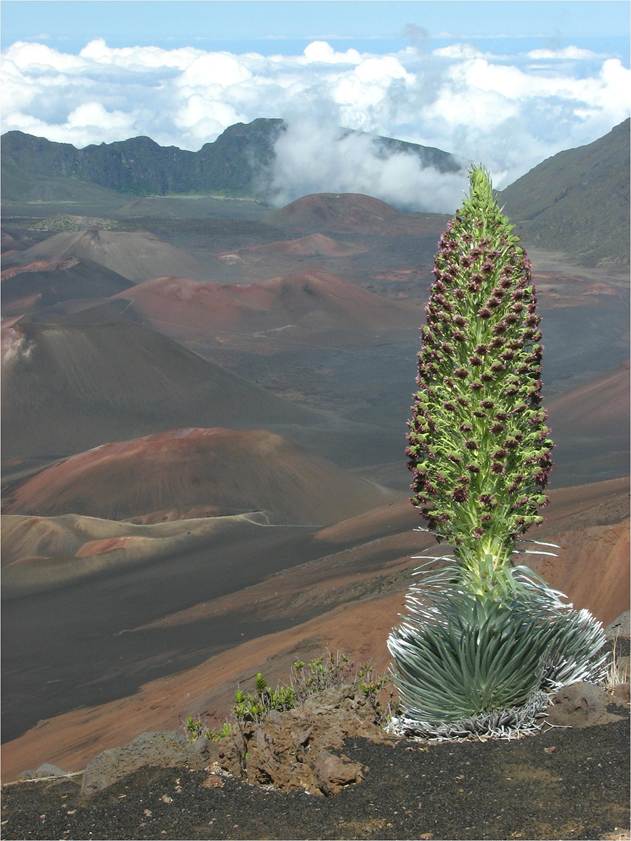
Haleakala Silversword

Global Warming May Have Severe Consequences for Rare Haleakala Silverswords

HONOLULU — While the iconic Haleakalā silversword plant made a strong recovery from early 20th-century threats, it has now entered a period of substantial climate-related decline. New research published this week warns that global warming may have severe consequences for the silversword in its native habitat.Haleakala Silversword

Known for its striking rosette, the silversword grows for 20-90 years before the single reproductive event at the end of its life, at which time it produces a large (up to six feet tall) inflorescence with as many as 600 flower heads. The plant was in jeopardy in the early 1900s due to animals eating the plants and visitors gathering them. With successful management, including legal protection and the physical exclusion of hoofed animals, the species made a strong recovery, but since the mid-1990s it has entered a period of substantial decline. A strong association of annual population growth rates with patterns of precipitation suggests the plants are undergoing increasingly frequent and lethal water stress. Local climate data confirm trends towards warmer and drier conditions on the mountain, which the researchers warn will create a bleak outlook for the threatened silverswords if climate trends continue.

“The silversword example foreshadows trouble for diversity in other biological hotspots,” said Dr. Paul Krushelnycky, a biologist with the University of Hawaiʻi at Mānoa, College of Tropical Agriculture and Human Resources, and principal investigator for the project, “and it also illustrates how even well-protected and relatively abundant species may succumb to climate-induced stresses.”

“The silversword is an amazing story of selective biological adaptation of this distant cousin of the daisy to the high winds and sometimes freezing temperatures on the high slopes and thin soils of Haleakalā volcano,” said USGS Director Marcia McNutt. “Despite the successful efforts of the National Park Service to protect this very special plant from local disturbance from humans and introduced species, we now fear that these actions alone may be insufficient to secure this plant’s future. No part of our planet is immune from the impacts of climate change.”

The Haleakalā silversword (Argyroxyphium sandwicense macrocephalum) grows only on a single volcano summit in Hawaiʻi, yet it is viewed by 1–2 million visitors annually at Haleakalā National Park. Although the decline and extinction of other rare species with small ranges (and the accompanying loss of biodiversity) can easily go unobserved and unappreciated, the silversword’s high profile makes it a good example with which to educate the public about global climate change.

Krushelnycky co-authored the paper along with Lloyd Loope, scientist emeritus with the U.S. Geological Survey, and others at the University of Hawai‘i at Mānoa, and University of Arizona.They explain that although climate change is predicted to place mountaintop and other narrowly endemic species such as the silversword at severe risk of extinction, the ecological processes involved in such extinctions are still poorly understood, and they are hoping to increase this understanding.

This report is the first publication to result from a collaborative effort between research scientists and land managers at Haleakalā National Park seeking to understand worrying trends for this popular federally threatened plant. The work was facilitated and funded by the National Park Service, along with U.S. Geological Survey and U.S. Fish and Wildlife Service. Dr. Krushelnycky and his collaborators were also awarded a grant by the newly established U.S. Department of the Interior Pacific Islands Climate Science Center, one of eight such centers throughout the country, to continue the work.

The full report, “Climate-Associated Population Declines Reverse Recovery and Threaten Future of an Iconic High-Elevation Plant,” published in the scientific journal Global Change Biology, is available on request from the above contacts.

http://www.usgs.gov/newsroom/article.asp?ID=3490#.UPXMyqHjms0


How to Register a Complaint Re Cane Smoke

Open field burning by Hawaiian Commercial & Sugar is a permitted activity (See 2012 Permit here), regulated by the State Department of Health (DOH) Clean Air Branch.

The 2012 Agricultural Burning Permit covers 15,439 acres (roughly half of sugar cane production) from March 20th through October 10th (though delays in burning will likely push the season into November, as was the case last year). There is no scheduled burning in December, January, and February (other than coal combustion at the Puunene Mill).

Those affected by specific burns can report the day, time, and location to the State Dept. of Health – Clean Air Branch and to specifically ask to register a complaint. Please be sure to include: Your name & address, date, time, location of smoke. Here are those contacts:


Email everyone in one click

If you experienced health effects please fill out the Maui Tomorrow Cane Burning Health Survey

Blake Shiigi, DOH-CAB Environmental Health Specialist (Maui) blake.shiigi@doh.hawaii.gov 808 984-8234

Lisa Young, DOH-CAB Environmental Health Specialist (Oahu)CAB.General@doh.hawaii.gov

Gary Gill, Deputy Director of Environmental Health (Oahu)
Gary.gill@doh.hawaii.gov

Additionally, it would be good to cc letters or messages to HC&S and the EPA:

Kerry Drake, EPA Region 9 Air Quality Specialist (San Francisco)
Drake.kerry@ epa.gov (or try drake.kerry@epamail.epa.gov )

Rick Volner, Jr., HC&S General Plantation Manager
rvolner@hcsugar.com
808 877-6961

To alert the Mayor’s Office that you are contacting these agencies, you may cc:
Rob Parsons, Maui County Environmental Coordinator robert.parsons@mauicounty.gov

To include all nine County Council members: County.clerk@mauicounty.us


Survey: Effects of Sugarcane Burning

Created by Maui Tomorrow Foundation

Have you or a member of your family or household been negatively impacted by sugarcane burning? We are working to put an end to this harmful practice, and we would love to hear your story. Please take a few minutes to complete the following survey. Please use a separate form for each event, if you have experienced more than one event.

Survey: Effects of Sugarcane Burning
  •   Yes
      No
  •   Yes
      No
  •   Yes
      No
  •   Yes
      No

Thank you for taking the time to complete this survey. Your information is vital to documenting the impacts from cane burning on Maui. With your help, we can move away from this harmful practice and ensure that breathing on Maui is no ka oi.

MAUI TOMORROW FOUNDATION, 55 N. Church St., Suite A4, Wailuku, HI 96793